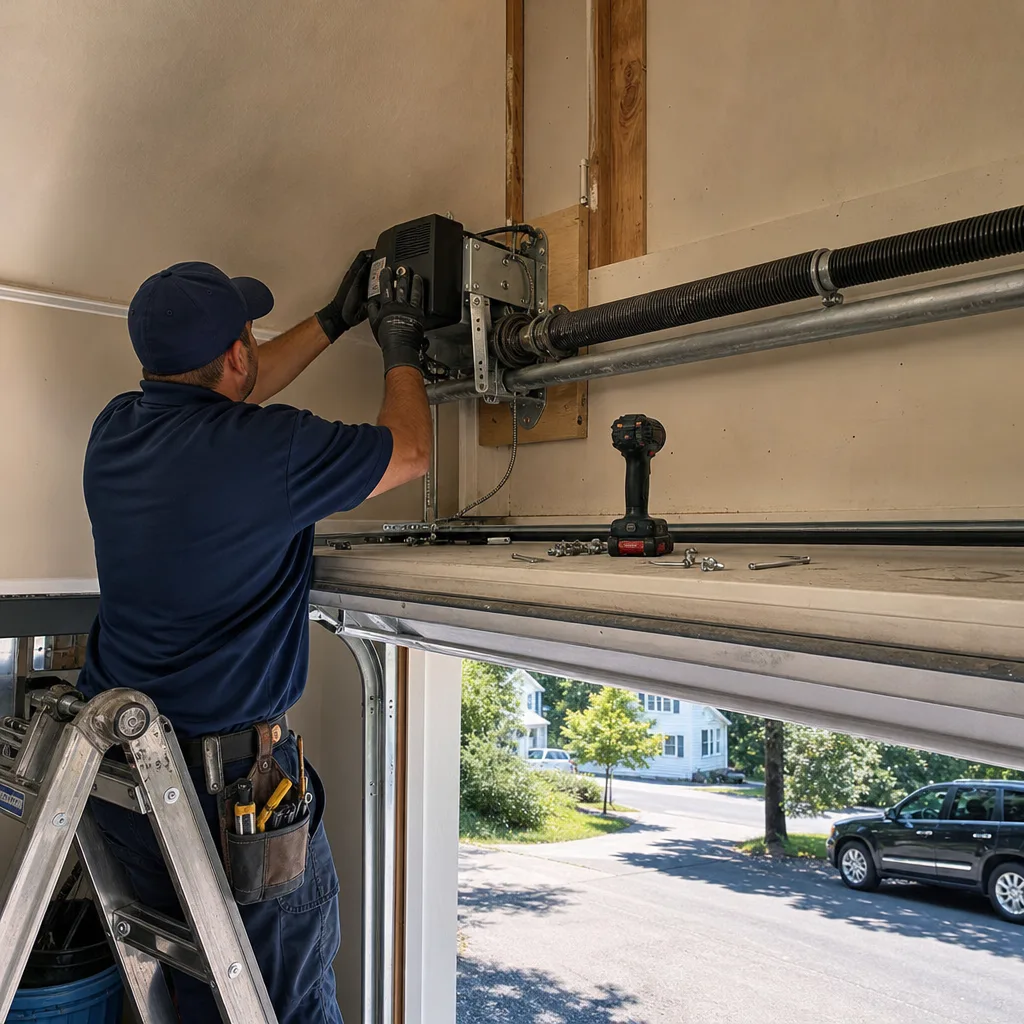
Last updated November 23, 2026
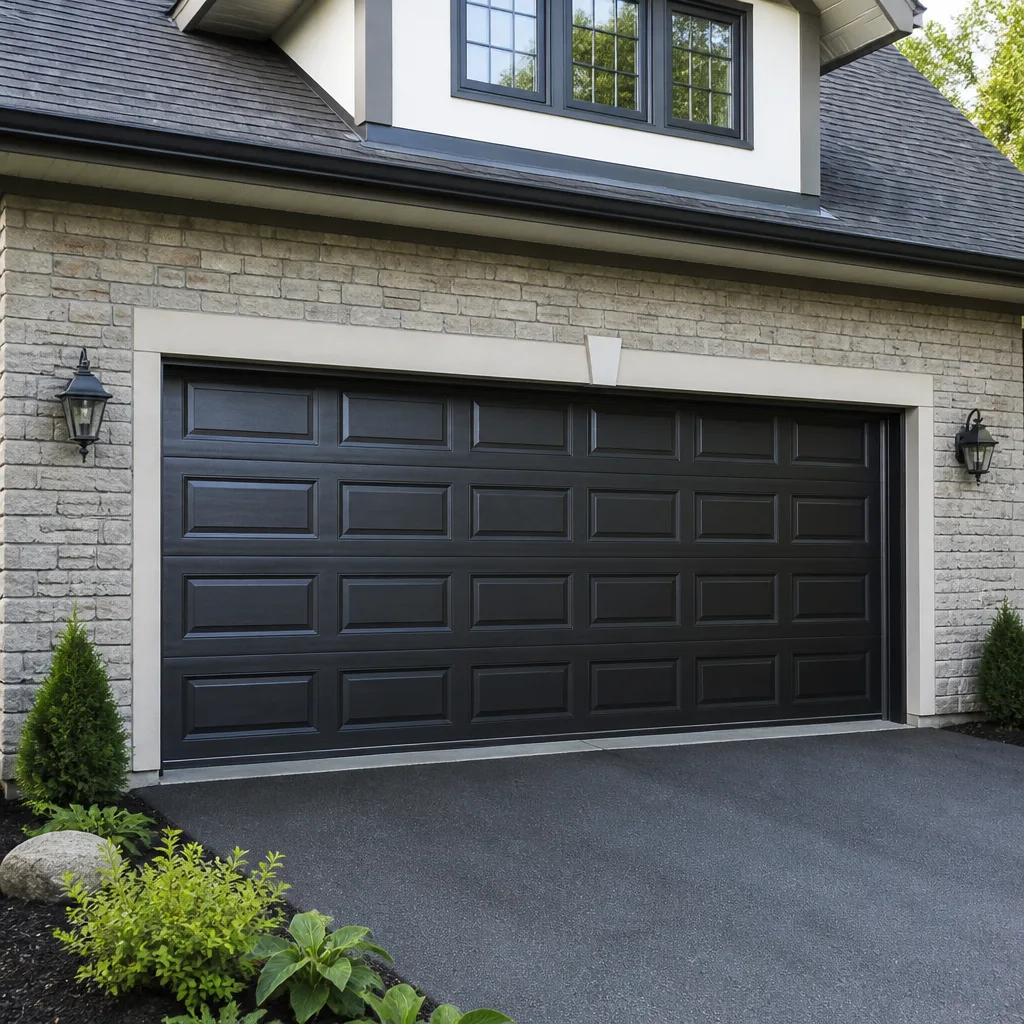 Raised-panel steel
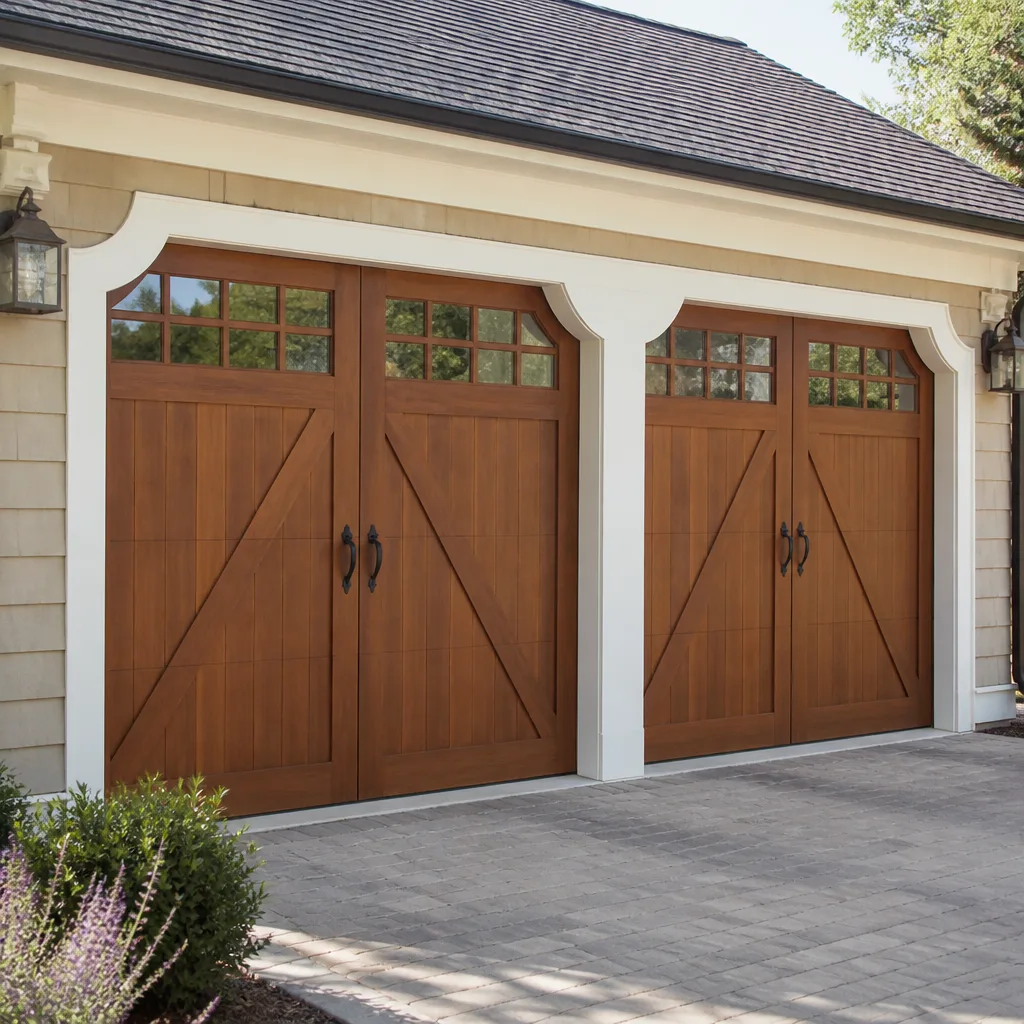 Carriage house
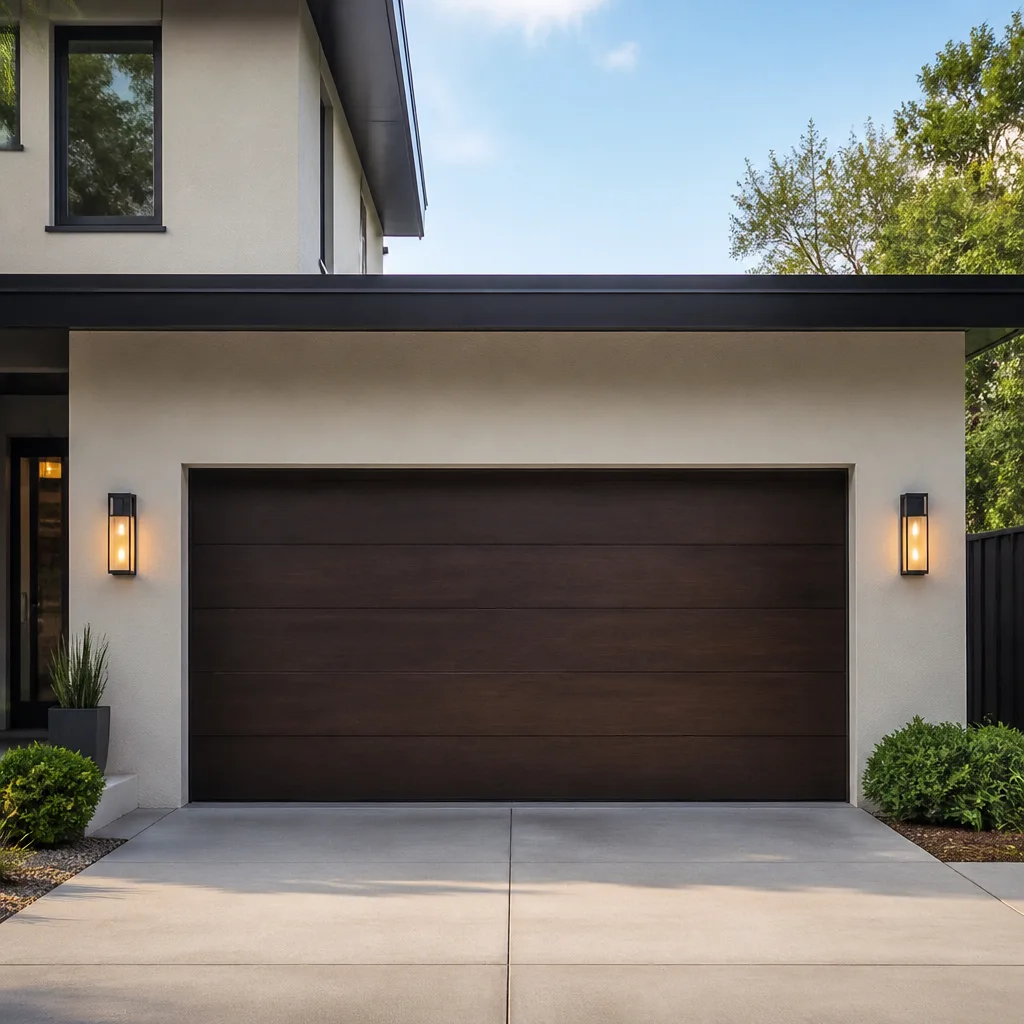 Modern flush
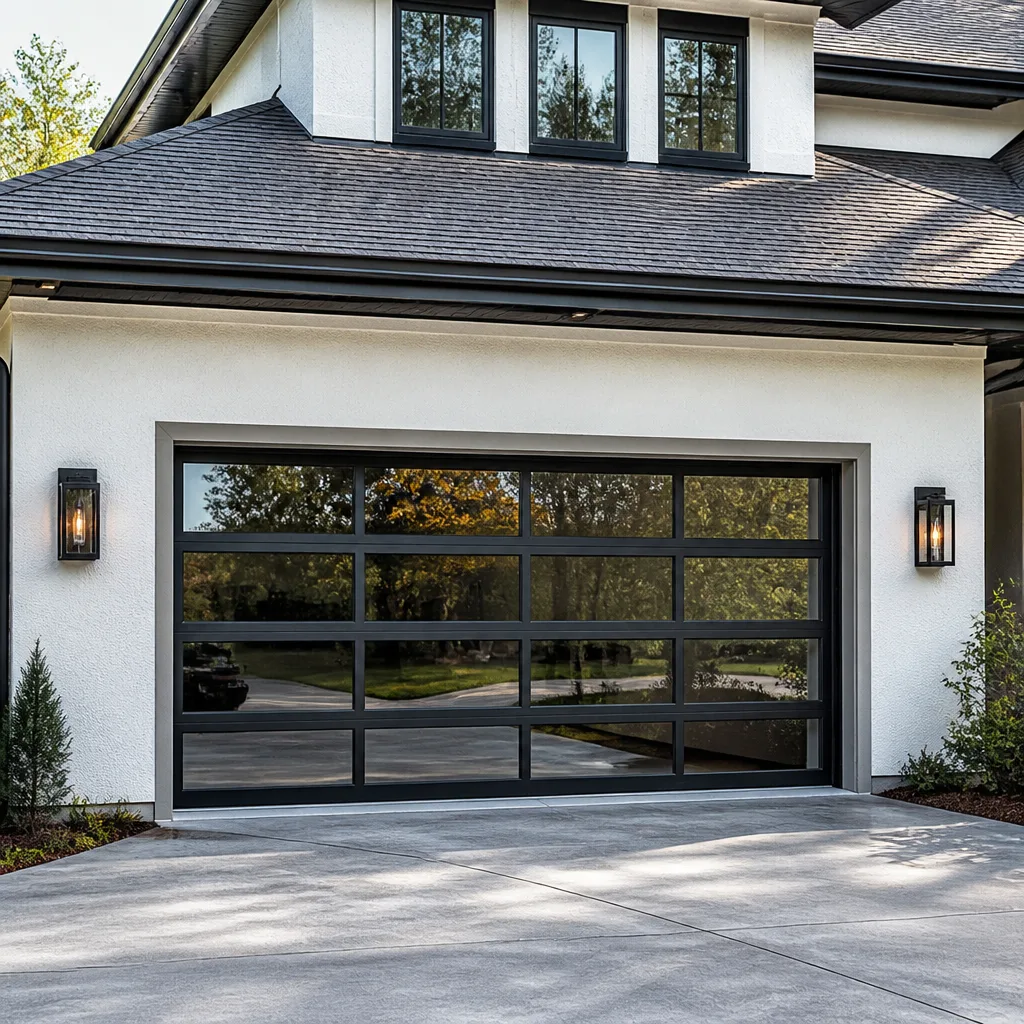 Full-view glass
 LiftMaster openers
 Chamberlain openers
Full 25-point door and opener safety check with every visit - springs, cables, rollers, tracks, and your LiftMaster or Chamberlain opener included
You get a price before we start. It does not change when the pro arrives.
Get your free estimateGarage Door Warning Signs: A Norwalk Homeowner’s Reference Guide
Most garage doors don’t fail without warning. They tell you something is wrong for weeks, sometimes months, before a spring snaps or an opener quits. The problem is that few homeowners know what a normal sound is versus a warning sound, so the early signal gets filed away as “the door being loud” until a $600 emergency turns into a $1,200 one. A grinding noise isn’t the same problem as a squealing noise. A door that reverses before hitting the floor isn’t the same fix as a door that won’t close at all. If you can describe what your door is doing, this guide tells you what’s likely wrong. We work on Norwalk doors every week, and the patterns repeat.
Quick Answer
Garage door warning signs fall into three groups: sounds (grinding, squealing, popping, slapping), visual clues (rust streaks on your springs, an uneven gap at the floor, sagging panels), and behavioral changes (the door reversing mid-travel, opening slower than it used to, or a remote that won’t respond). Any single sign is worth noting; two or more together on the same door usually means a component is close to failing and the door should be looked at before it’s used again.
Styles & brands we work with
- Raised-panel steel
- Carriage house
- Modern flush
- Full-view glass
- LiftMaster openers
- Chamberlain openers
Table of Contents
- The Sound Index: What Each Noise Points To
- The Visual Inspection Guide
- Urgency Tiers: What to Monitor, What to Fix This Week, What to Stop Using
- Opener Behavior Diagnostics
- How to Check for Frayed Cables Without Getting Hurt
- Norwalk Seasons and What They Do to Your Door
- What Garage Door Repairs Typically Cost in the Norwalk Market
- The Maintenance Routine That Prevents Most Failures
The Sound Index: What Each Noise Points To
Sound is the earliest and cheapest warning a garage door gives you. A door in good working order makes a steady, low mechanical hum: the opener motor, the chain or belt moving, the door rolling on its tracks. If a new noise has joined that hum, here is what each one usually means.
Grinding
Grinding usually points to metal-on-metal contact. The most common causes are dry or worn rollers that no longer spin freely, a bent track forcing the rollers to scrape, or a torsion tube dragging in its bearings. Grinding tends to get worse over weeks rather than hours, so it belongs in the “service this week” tier. If the door is a Clopay or Amarr steel model, the heavier panels put more load on rollers, and worn rollers show up as grinding sooner than on a lighter door.
Squealing
Squealing is high-pitched and usually means friction without a failing part yet: dry hinges, dry rollers, or a torsion spring that needs lubrication. This is often the one noise you can actually prevent with a little attention to lubrication. Left alone, it grinds down moving parts until a repair replaces what routine upkeep would have protected.
Popping
A sharp pop – especially when the door is opening, or when a spring looks stretched or curved instead of straight – is the sound a torsion spring makes as it winds or comes unwound. A spring that has visibly stretched has done its job for years and is nearing the end. A pop followed by the door suddenly feeling heavy and hard to lift by hand is a spring that has already failed. Do not use the door after that sound; the opener will try to lift a load it wasn’t built to carry and cause further damage.
Slapping, Rattling, or Clanking
These lower-impact noises usually come from loose hardware: bolts backing out of hinges, a belt or chain with too much slack, or a track that has come loose from the header above the door. Northern Norwalk homes built in the mid-20th century often have tracks anchored into older framing, and vibration works those bolts loose over time. Slapping tends to be the least urgent of the four, but it’s also the easiest to check yourself and the fastest to fix once a technician is on site.
Opening Different Sounds at Different Points
Note where in the door’s travel a new sound appears. A noise only at the bottom of the travel often means the door is hitting or dragging on something; a noise only at the top means the top panel, top roller, or the opener bracket is involved. That detail cuts diagnosis time, and a technician can walk in knowing where to look first.
The Visual Inspection Guide
Walk out to your garage and look at the door from a few feet back, in good light, before the door moves. Here is what to look for and what each clue tends to indicate.
Rust Streaks or Reddish Dust on the Springs and Cables
Torsion springs above the door, and the cables that run down the sides, can show rust streaks or a reddish, dusty residue when the steel is deteriorating or a cable has begun to fray under the protective sleeve. Rust alone doesn’t mean failure, but rust on a spring is one of the signs that it’s near the end of its usable life. That’s not cosmetic: a failing spring is a dangerous part to handle, and it belongs to a technician who handles them every day.
An Uneven Gap at the Floor
Set a straight edge or a level on the floor and check the light gap under the door. An even gap all around is normal. A gap that’s wider at one corner suggests the door is out of balance, a track has shifted, or the concrete floor under one side has settled. Norwalk’s older driveways and garage slabs are not always perfectly level after decades, and a gap that appears on one side over one winter is worth watching.
Sagging or Bowing Sections
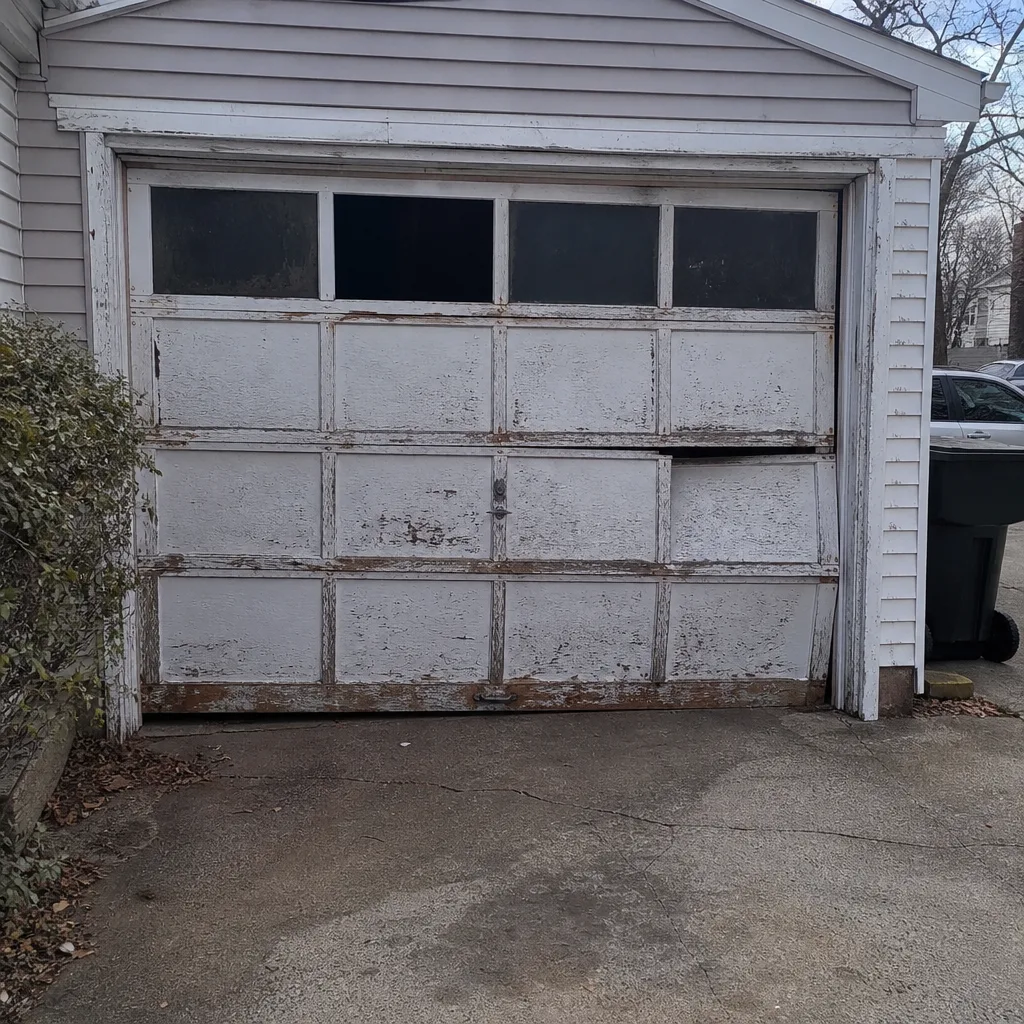
Stand straight on to the door and look across the panels. A section that bows in the middle, or a door that sags at the bottom, usually points to a failing panel, a bent track, or a door that’s been asked to lift against a partially failed spring for a while. Steel doors handle a bow better than wood doors; a wood or composite door that sags usually means water has gotten into a panel and softened it.
Hanging Rollers, Missing Hardware, or Track Separation
Look at the rollers (the wheels inside the track) and the hinges between panels. A roller that’s come loose from its hinge, a missing bolt, or a track that’s visibly pulling away from the frame on one side are all frequent failure signs. Don’t reach into a track to “fix” a loose roller yourself – the tension on a garage door is stored in the system and can release unpredictably.
Door Orientation and Panel Health
On sectional doors, the bottom panel takes the most wear and receives the near-constant impact of opening and closing. A bent bottom weather seal, a dented bottom panel, or a panel that’s separating at the seam between sections are all reasons to have the door looked at before the problem spreads to the hardware.
Urgency Tiers: What to Monitor, What to Fix This Week, What to Stop Using
Not every warning sign means the same level of urgency. Getting this right lets you act calmly instead of either panicking over a squeak or ignoring a failure until it costs more. Here is how we sort what we see.
Tier 1 – Monitor for 30 Days (and Note What Changes)
- Mild squealing on opening or closing that persists for more than a few cycles
- A small, even gap at the floor that has always been there
- A rattle that only shows up at the same point in the door’s travel
- A door that sounds the same as always but that you haven’t had checked in a while
Monitoring doesn’t mean ignoring. Note whether the sound is changing, whether it appears on both opening and closing, and whether the door’s travel has gotten slower. If any of those shifts in the next month, move to Tier 2.
Tier 2 – Service This Week
- Grinding during any part of the door’s travel
- A visible rust streak on the spring or cable
- An uneven gap at the floor that wasn’t there before
- The door moving noticeably slower than it used to
- The opener straining audibly or pausing mid-travel
- A track that is drifting out of line or a roller that is visibly loose
Tier 3 – Stop Using the Door Immediately
- The door has suddenly become much heavier to lift by hand
- A sharp pop, followed by the door not moving normally
- A cable that is visibly frayed, or a spring that looks stretched and curved
- The door hanging at an angle or opening crooked
- The opener running but the door not moving at all
A spring that has failed, a cable that is fraying, and a door that has gone out of balance are all situations where the safest thing to do is leave the door closed. Springs and cables store energy. When something goes, it releases without warning, and a trained technician has the tools and knowledge to release it safely. When it can’t wait, call; emergency garage door service exists for exactly this.
Opener Behavior Diagnostics
An opener has its own set of warning signals, and they’re often misread as “the opener is broken” when the real problem is the door it’s trying to move. Here is how to tell the difference.
Slow or Labored Movement
If the opener moves the door but seems to strain, and the door itself is stiff or heavy, the opener isn’t the primary issue. That pattern usually points to a spring or balance problem the opener is compensating for. If the door feels light but the opener still moves slowly, the opener or its capacitor has a problem of its own. An electric opener’s lift force and safety-reverse settings also play a role; if those settings have gone out of adjustment, an opener can seem slow or fail to open fully.
Reversing Mid-Cycle
A door that goes up a foot, stops, and reverses – or reverses before it ever reaches the floor – is often showing you a safety-system issue. The photo-eye sensors near the floor are the usual first place to look: if something is blocking the beam, or the sensors have been knocked out of line, the opener sees a blockage and reverses as designed. If the sensors look clear and the door still reverses, the opener’s travel limits or safety-reverse settings may need adjustment. On a Chamberlain or Genie opener, this behavior is common enough that it’s one of the first things a technician checks.
Remote Lag or No Response
A remote that requires two or three presses, or works from close range but not from the end of the driveway, points to a battery, a remote that’s out of sync with the opener, or RF interference. If the wall button works but the remote doesn’t, the opener itself is usually fine. If neither responds, check the circuit feeding the opener before assuming the opener has failed.
The Opener Makes Noise but the Door Doesn’t Move
You hear the motor running, but the door sits still. That pattern is often a broken spring or a disconnected drive, and it’s a Tier 3 warning. Stop using the door. The opener is only as strong as the door it’s connected to.
Opener Age and Compatibility
If you’ve just moved into a Norwalk home and don’t know how old the opener is, look for a manufacturing date sticker on the motor housing and note the brand. Whether it’s Chamberlain, Genie, LiftMaster, or an older brand, we work on the equipment that’s already in the driveway rather than recommending a replacement just because it’s unfamiliar. Our technicians have up to 10 years of experience with this kind of diagnosis.
How to Check for Frayed Cables Without Getting Hurt
Cables are under tension, and a cable that’s already fraying is a cable that can snap. You do not need, and should not attempt, a hands-on inspection of a garage door cable. What you can safely do is a visual check from the floor.
- Stand at least a few feet back from the door and keep the door closed. Never reach into the track, lift the door by hand to look at a cable, or try to feel along the cable while the door is in motion.
- Look at the cables running down each side, from where they attach near the bottom corners up to the drums above.
- Look for a cable that is visibly frayed, kinked, or has loose strands poking out from a sleeve. A cable with separated strands is a cable to stop trusting.
- Look at the attachment point at the bottom corner of the door – a bent or pulled-out bracket is a red flag.
- If the cable looks fine but you’re hearing a popping or scraping noise, or the door has gone crooked, it still needs professional attention. Cables can fail internally before anything is visible from the outside.
- Do not lubricate, tighten, or replace a cable yourself. It’s one of the most dangerous parts of the garage door system to work on.
One thing we tell homeowners: if a cable ever fully lets go, the sound is usually unmistakable and the door is immediately unusable. Nobody should be standing underneath the door or reaching into the mechanism when that happens. That’s why a visual check from a distance is the only safe DIY step here.
Norwalk Seasons and What They Do to Your Door
Where you live works your garage door in specific ways, and Norwalk is no exception. Winter drives the hardest use: temperatures that regularly drop below freezing stiffen the lubricant in rollers and hinges, and the door works against that added friction every time it opens. Depending on where you are in town, a west- or north-facing door takes longer to warm in the morning, so the door’s metal parts are coldest when they’re first working. Cold mornings are also when popped springs show up most often.
Summer brings its own pattern. Heat and humidity expand the wood and composite components in older doors, and warm weather loosens doors that already have a bit of looseness in the track. Summer is also when most homeowners notice a door that “suddenly” squeals – often after months of a growing lubrication problem.
Spring and fall are the seasons for two things: pollen and rain. Pollen collects in the tracks and on the rollers, and dirt moves into the mechanism with it. After a stretch of rainy weather, check the tracks for debris. The neighborhoods around Calf Pasture Beach, the East Norwalk streets near the train station, and the hillier sections of Silvermine all have their own patterns, but the seasonal cycle is the same across town.
What Garage Door Repairs Typically Cost in the Norwalk Market
Pricing varies with the door and the problem, but here is the range homeowners in this market typically see for the most common repairs. These are estimates, not final prices. The written quote you get before any work begins sets the actual price.
| Repair | Typical Estimated Range |
|---|---|
| Single torsion spring replacement | $180 – $340 per spring |
| Spring replacement, matched pair (closely spaced or heavy door) | Roughly twice the single-spring range |
| Roller and hinge replacement (full door) | $120 – $250 |
| Track realignment or repair | $150 – $300 |
| Opener repair (photo-eye, travel limit, safety setting) | $120 – $280 |
| Remote and wireless keypad programming | $80 – $150 |
| Cable replacement (per side) | $150 – $300 |
Two notes on this. First, when one torsion spring fails, we usually replace both. A matched pair is usually priced close to twice the single-spring estimate, and it’s worth asking about because a door usually has two closely matched springs that wear at a similar rate. Second, your written quote is the price you’ll be billed. We don’t add a surprise charge after the work is done; if the door needs something beyond what we quoted, you’ll hear about it before we start, not on the invoice.
The Maintenance Routine That Prevents Most Failures
Most of the warning signs in this guide are preventable with a short, seasonal routine. That routine will not save you from every failure, but it protects the moving parts that cause most of them.
- Lubricate the rollers, hinges, and torsion springs with a garage-door-specific lubricant twice a year – once at the start of winter and once at the start of summer.
- Test the balance of the door once a season: with the door closed, pull the emergency release and lift the door by hand about halfway. A well-balanced door should stay there on its own. If it drops or feels heavy, the door needs service before it’s used again.
- Check the photo-eye sensors at the start of the season: clean the lenses and confirm that something placed in the beam will reverse the door.
- Clear the tracks of leaves, pollen, and debris at the change of seasons.
- Walk the door visually once a month – rust on springs, a gap at the floor, a loose roller, a track out of line. Fix what you find early.
- Never lubricate the cables or try to adjust a spring. Those are for a technician.
If you’ve had a technician out for an opener repair (a lot of our garage door opener repair calls start with a slow or reversing door), ask them to check the springs, rollers, and cables while they’re there. It’s easier and less costly than a separate emergency visit later. When a door needs full replacement, we handle the whole job – garage door installation from first measure to finished door, so the early warning signs end before they start.
Common Mistakes to Avoid
- Assuming a noise means the opener is failing. Most of the time, a door that’s suddenly noisy has a problem with the door itself – a spring, a roller, or a track – and the opener is just the messenger. Test the door’s balance before calling for a repair quote.
- Trying to replace a torsion spring yourself. A garage door spring is one of the most dangerous parts of the system to handle. Leave spring work to a technician who handles springs every day. We offer a dedicated garage door spring repair service for exactly this reason.
- Ignoring a gap at the floor through the winter. Cold, snow-cover, and Norwalk’s freeze-thaw winter can make a door gap worse before it gets better. Address one that’s widening before it lets in weather and pests.
- Calling for a repair before checking the obvious. A door that won’t close may be a photo-eye that’s simply out of line, a remote out of sync, or a circuit trip. Check the simple things before assuming a big repair is needed.
- Buying a replacement door because the opener acts up. A slow-moving or reversing door often needs an opener adjustment or a spring fix, not a new door. Get a diagnosis before deciding.
- Letting a “quiet” problem go for months. A grind or a squeal that seems harmless usually gets louder. The longer you wait, the more parts the problem touches.
- Lifting a heavy door by hand repeatedly to get in and out. That puts an enormous load on the door’s hardware and is one of the ways a simple repair becomes a much bigger one.
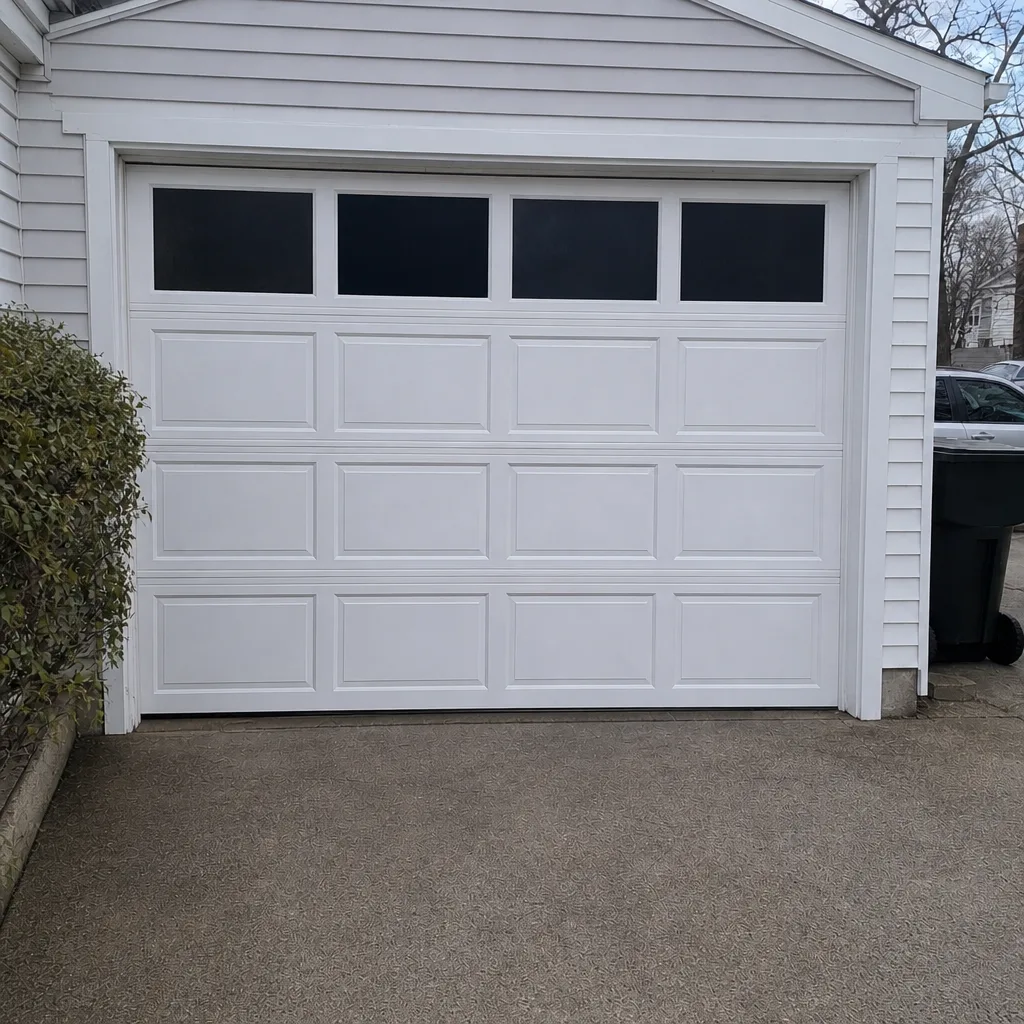
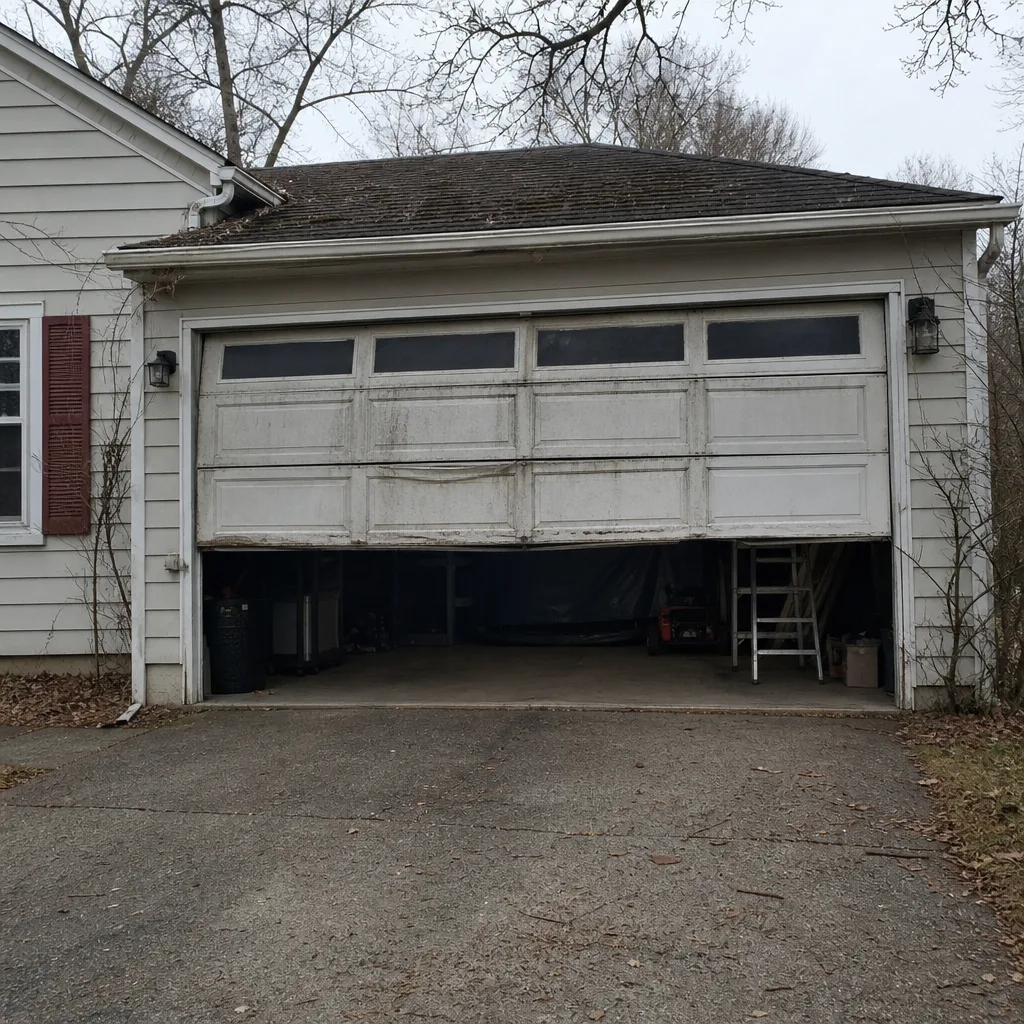
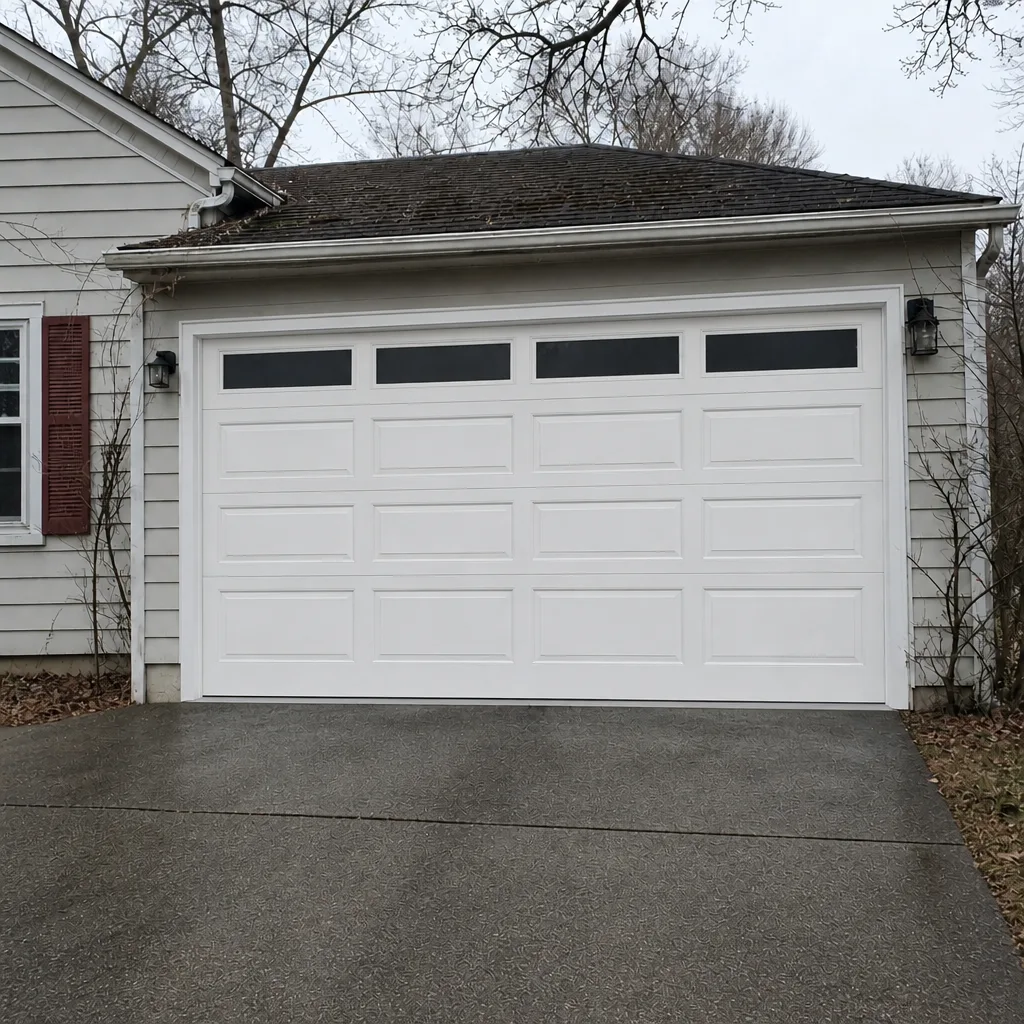
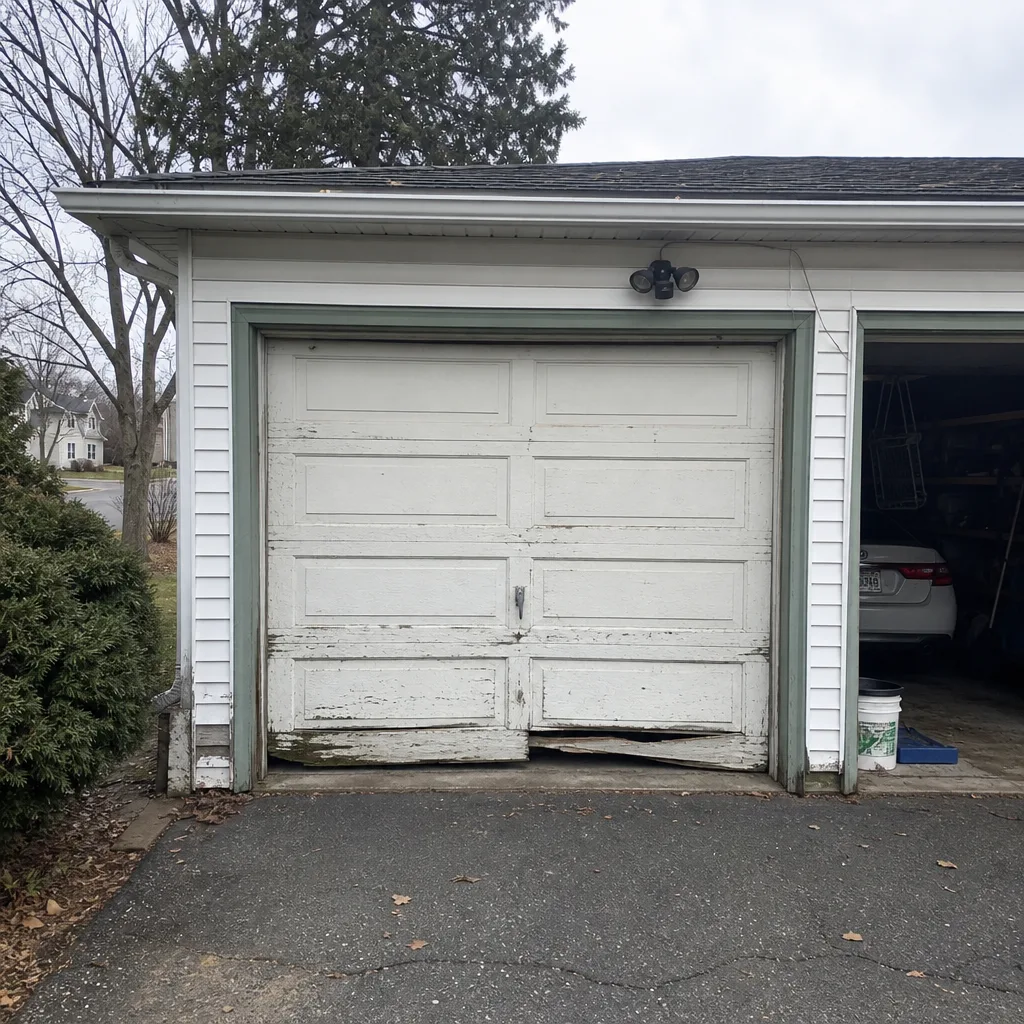
See the difference
 Before
 After
 Before
 After
 Before
 After
When to Call a Professional
You should call a professional the moment any warning sign lands in the Tier 3 list: a stretched or curved spring, a frayed cable, a door that has gone crooked, a door that has suddenly become too heavy to lift, or a sharp pop followed by a door that doesn’t move. Any of these are reasons to stop using the door and call. Symptoms in Tier 2 – grinding, a rust streak on a spring, a new gap at the floor, a door that’s slowing down, an opener that’s straining – are reasons to book a repair this week, before the door is put in a position where it can’t be closed. Norwalk Garage Door Repair Co offers free estimates in Norwalk. Call (866) 964-5735. When it can’t wait, we have emergency garage door service ready. From opener to panel to spring, one call covers it all.
Frequently Asked Questions
The first sign is usually a stretched or curved appearance on one of the springs, a rust streak or reddish dust on the spring, or a loud pop during opening or closing. A door that suddenly feels much heavier to lift by hand is a spring that has already failed. Stop using the door and call for a garage door repair assessment. Call (866) 964-5735 – estimates are free.
No. A garage door torsion spring stores a large amount of mechanical energy and can release it without warning, which is why spring work is one of the hardest parts of the trade to do safely. Springs and cables are among the most dangerous garage door parts to work on. Norwalk Garage Door Repair Co has a dedicated spring repair service for exactly this reason – leave it to a technician who handles them every day. Call (866) 964-5735.
That is usually a safety-system signal rather than a door problem. The photo-eye sensors near the floor may be blocked by debris, knocked out of alignment, or tripped by an object in the beam. If the sensors look clear and aligned, the opener’s safety-reverse or travel settings may need adjustment. Call (866) 964-5735 for a diagnosis.
Most repairs in this market fall roughly between $120 and $340 depending on the part and the door. A single torsion spring typically runs about $180 – $340, roller and hinge work about $120 – $250, and an opener repair about $120 – $280. These are estimates; your written quote sets the final price. Call (866) 964-5735 for an exact quote – estimates are free.
You can usually wait, but wait while watching it, not ignoring it. A grind, squeal, or rattle is telling you a part is wearing faster than it should. If the noise is changing, getting louder, or the door is slowing down, book a service this week. A trained technician can often catch a problem while it’s still a minor repair. Call (866) 964-5735.
Yes. Norwalk Garage Door Repair Co services eight leading garage door brands – LiftMaster, Chamberlain, Genie, Clopay, Amarr, Wayne Dalton, Craftsman, and Raynor – which means we work on the brand you already have rather than pushing a specific line. Our technicians have up to 10 years of experience in the trade. Call (866) 964-5735.
No. Your quote is written and agreed before any work starts, and that quote is the price you’re billed. If a technician finds something beyond what was quoted, you’ll hear about it before the work begins, not on the invoice afterward. Call (866) 964-5735 to book a free estimate.
The Bottom Line
Every garage door failure gives you a warning: a sound that shows up where there wasn’t one, a rust streak on a spring, a gap at the floor, or an opener that hesitates. The skill is knowing what each sign means and how urgently to act. Grinding, squealing, and popping each point to different problems, and the right response ranges from “keep an eye on it” to “stop using the door today.” If you’re unsure which tier a symptom belongs in, describe it to us. We work on the brand you already have, we handle springs, openers, and full doors, and we install it right the first time so repair calls come later, not sooner. For Norwalk doors of every brand and age, the best move is to fix the warning sign while it’s still small.
Whether you’ve got a grinding roller, a spring that popped, or a door that won’t close at all, a free estimate from Norwalk Garage Door Repair Co tells you what’s actually wrong and what it will take to fix. Call (866) 964-5735 for a free estimate today. Norwalk Garage Door Repair Co offers repair, opener service, spring repair, installation, and emergency garage door service for homeowners across Norwalk.
Written by the team at Norwalk Garage Door Repair Co.