Last updated November 23, 2026
 Raised-panel steel
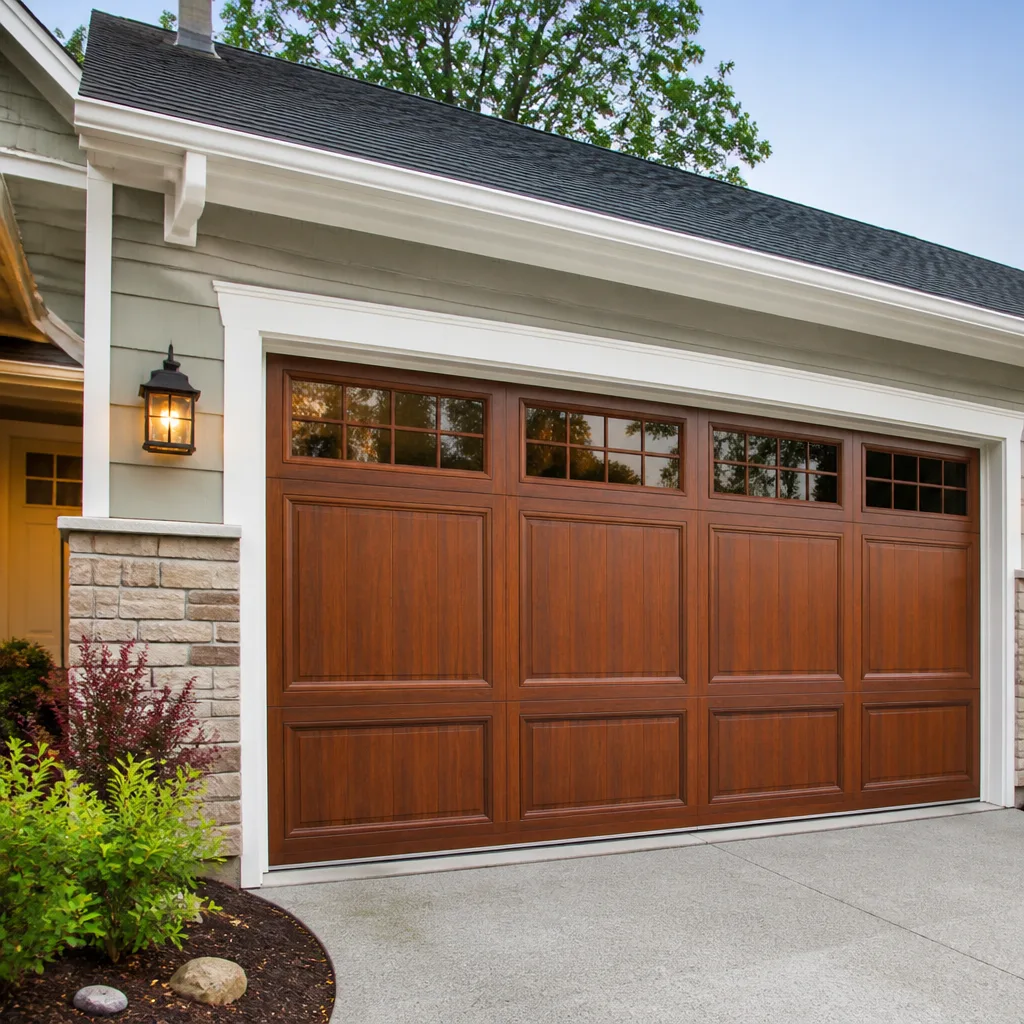
 Carriage house
 Modern flush
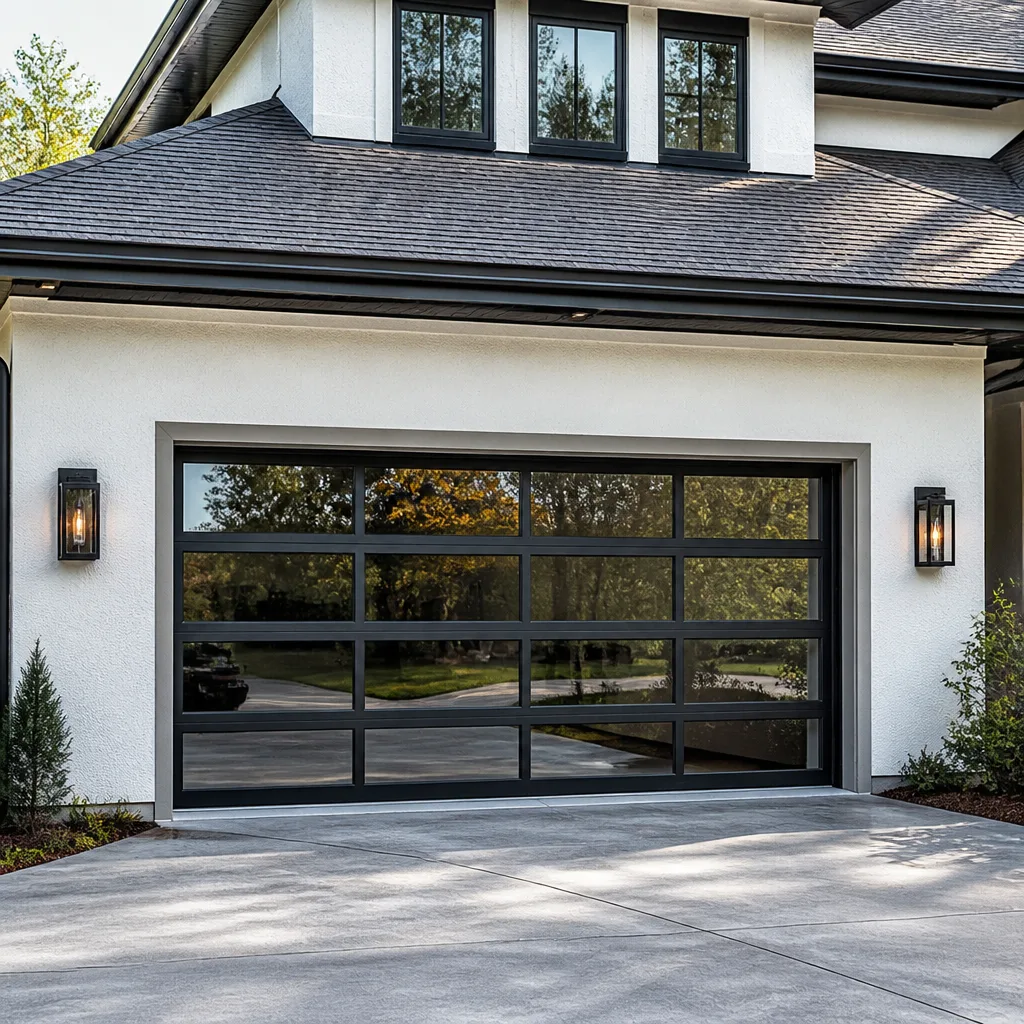 Full-view glass
 LiftMaster openers
 Chamberlain openers
Full 25-point door and opener safety check with every visit - springs, cables, rollers, tracks, and your LiftMaster or Chamberlain opener included
You get a price before we start. It does not change when the pro arrives.
Get your free estimateSeasonal Garage Door Care for Norwalk: Year-Round Homeowner’s Guide
Here’s the part most homeowners get wrong: the spring that snaps in January didn’t fail in January. It started going bad back in October, when summer humidity had already thinned the lubricant on the coils and nobody wiped them down before the cold set in. By the time the door stops opening, the damage is months old. Seasonal care isn’t about a vague “check it twice a year” reminder. It’s about staying one season ahead of the failure. In this guide, we walk through what Norwalk‘s four seasons actually do to a garage door, what you should do in each one, and how the work you skip this month is usually what costs you next season.
Quick Answer
Check your garage door once at the start of each season and once mid-season: lubricate springs, rollers and hinges in fall, keep the bottom seal clear of ice and snow in winter, inspect for winter damage as temperatures climb in spring, and tighten hardware and inspect cables and drum tension in summer. The main seasonal threats in Norwalk are humidity in summer, ice and freeze-thaw in winter, and the freeze-related seal and weatherstripping damage that follows. Staying ahead of each one is what keeps a door out of the emergency category.
Styles & brands we work with
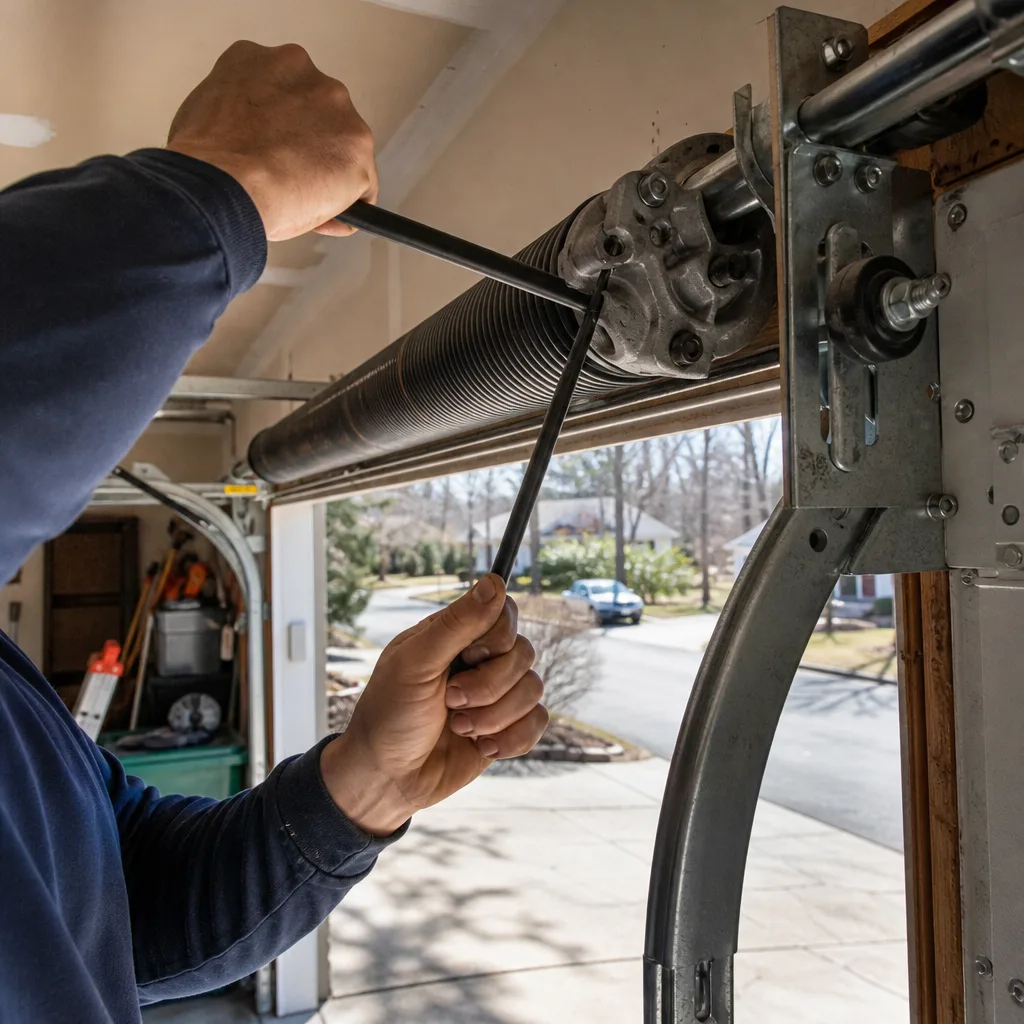
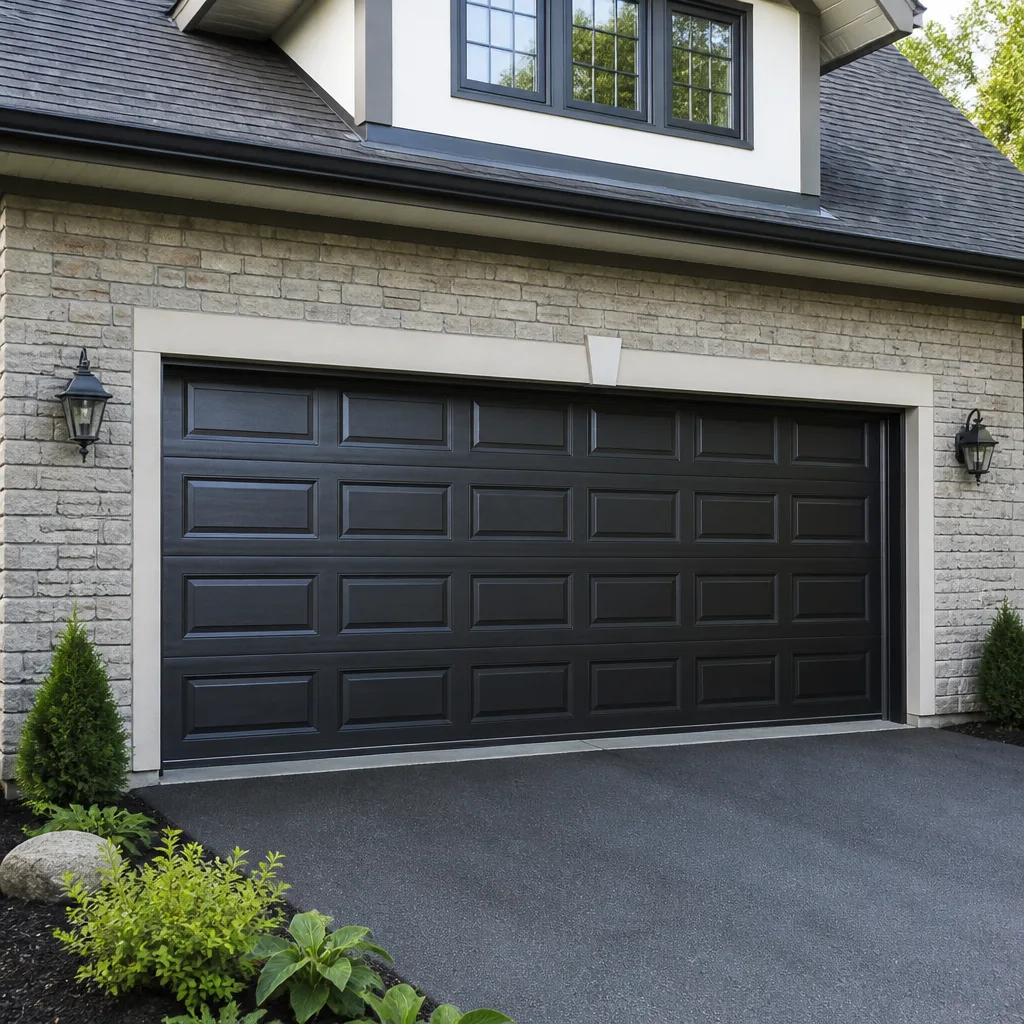
- Raised-panel steel
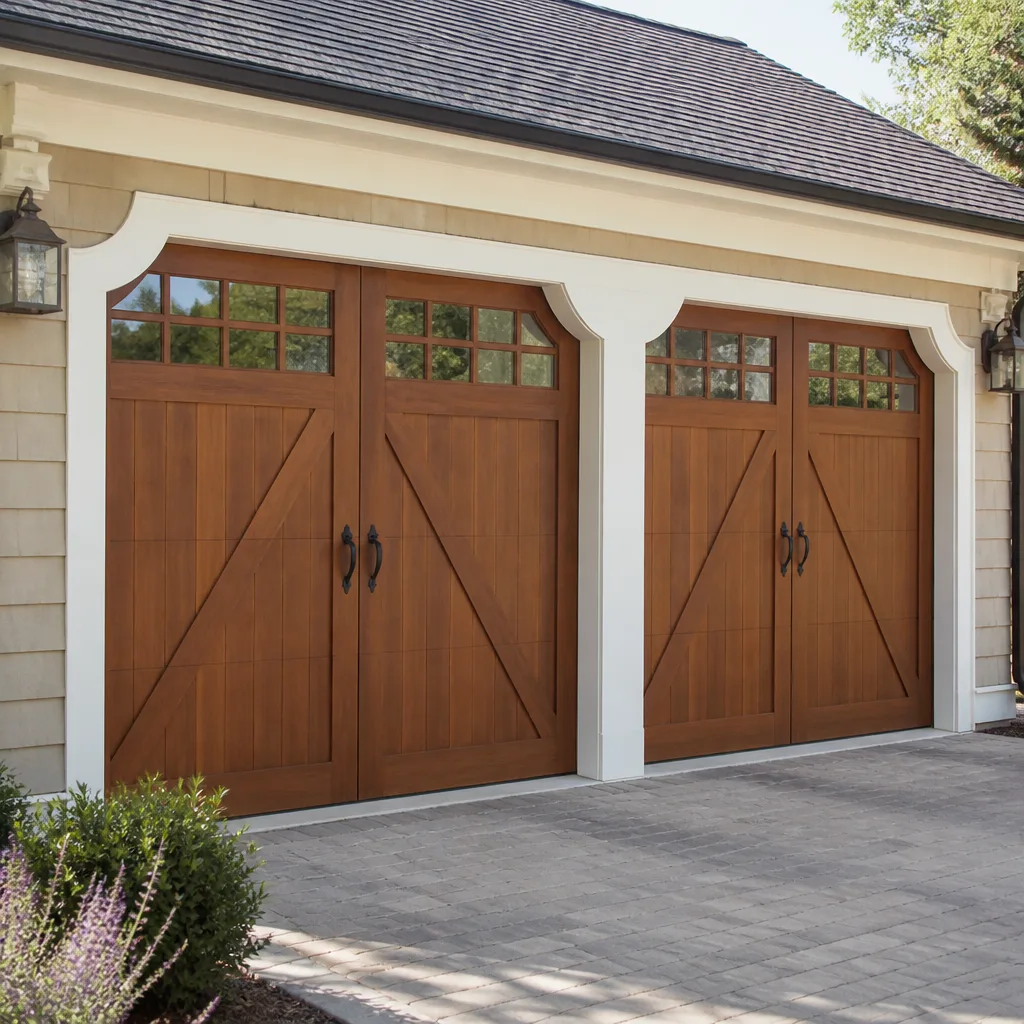
- Carriage house
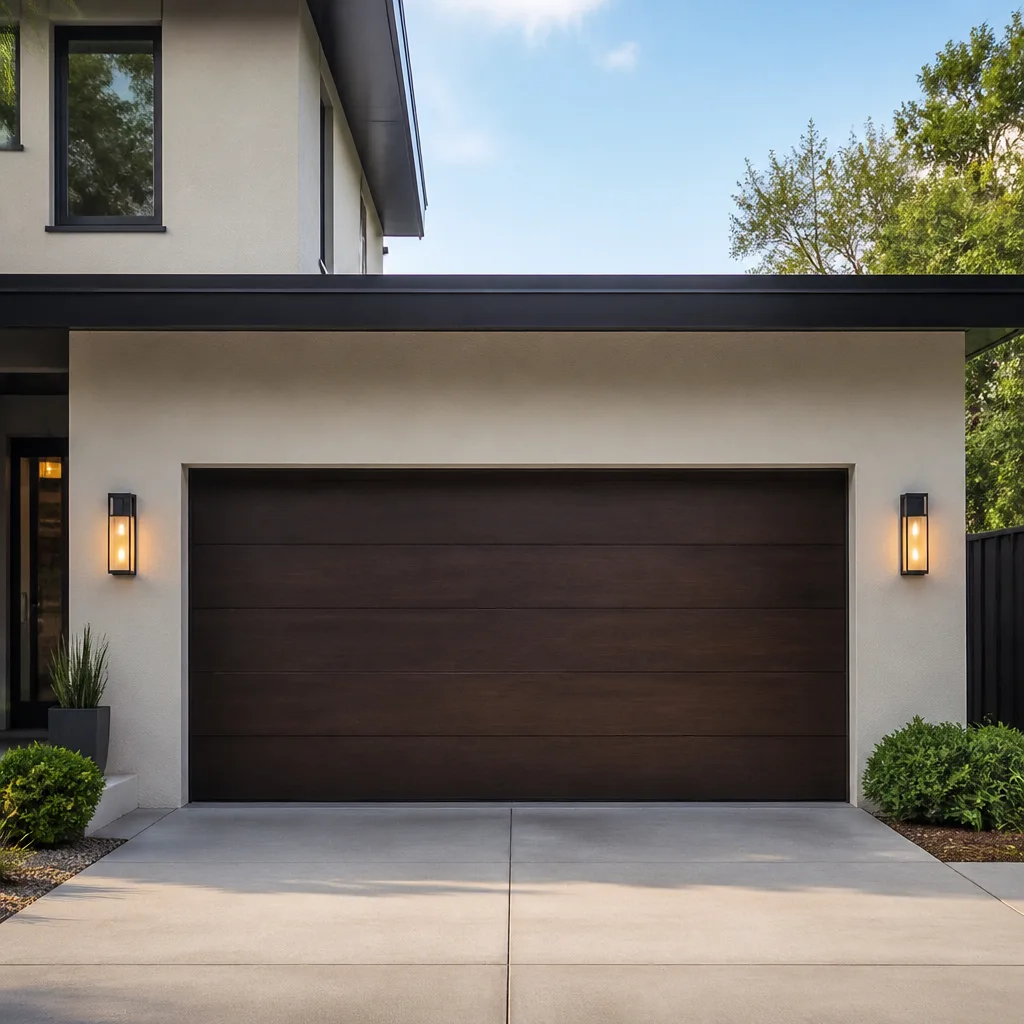
- Modern flush
- Full-view glass
- LiftMaster openers
- Chamberlain openers
Table of Contents
- Why Norwalk’s Seasons Stress a Garage Door
- Fall: The Prep Work That Prevents Winter Failures
- Winter: Frozen Doors, Ice, and What Not to Do
- Spring: Finding Winter Damage Before It Becomes a Summer Failure
- Summer: Humidity, Wood Composite Doors, and Cable Tension
- How Norwalk’s Climate Affects Corrosion Timelines
- The Year-at-a-Glance Seasonal Schedule
- Common Mistakes to Avoid
- When to Call a Professional
- Frequently Asked Questions
- The Bottom Line
Why Norwalk’s Seasons Stress a Garage Door
A garage door is a moving system of metal, wood or composite panels, rubber seals, and tensioned cables and springs, and every one of those materials responds differently to temperature and moisture. In Norwalk, that means a door faces warm, humid summers, wet and cold winters, and a spring and fall that swing between the two. That constant change is the real wear. Metal expands and contracts. Lubricant thins in heat and stiffens in cold. Rubber seals soften in summer and go brittle in winter.
Norwalk sits along Long Island Sound, and that puts it in a distinct category compared with inland Connecticut towns. Humidity and moisture in the air are higher here, and the practical effect is that bare or thinly coated metal hardware – springs, hinges, rollers, the drum and its brackets – corrodes faster than it would a few towns inland. A spring that would last a certain number of years inland can lose life faster near the water. That doesn’t mean you need special marine-grade equipment. It means keeping hardware lubricated and inspecting it in the fall is more important here than it is inland, because the corrosion window is shorter.
So the premise of this guide is simple: in Norwalk, the season you’re in is usually paying the bill for the season before. Fall sets up winter. Winter sets up spring. Spring sets up summer. Get ahead of each one and a door that’s in reasonable shape generally stays in reasonable shape. Fall behind and you’re calling for a repair when you least expect it.
- Summer: high humidity, wood composite swelling, cable drum looseness.
- Fall: the window to lubricate and seal before cold sets in.
- Winter: freezing, bottom seal damage, weatherstripping cracking.
- Spring: the true inspection season – winter damage surfaces.
Fall: The Prep Work That Prevents Winter Failures
Fall is the highest-value season for seasonal care in Norwalk. Every step you take now is one you won’t be paying for in January. The goal is to get every moving part lubricated, every seal intact, and every fastener tight before the first hard freeze.
Start with a proper lubrication pass. Use a garage door lubricant – not WD-40 as a substitute, that’s a solvent, not a lubricant – on the torsion springs, the hinges, the rollers, the bearing plates, and the opener rail and chain if you have one. The reason this matters more in Norwalk than inland is that humid air works against the thin factory coating on hardware. The lubricant is a barrier. When it thins or washes off over summer, the fall is your last clean chance to reapply it before the freeze.
- Lubricate springs, hinges, rollers, and bearing plates. Wipe off any grit first; grit plus lubricant makes a grinding paste.
- Inspect the bottom seal. Run your hand along the rubber seal at the floor. If it’s cracked, torn, or flattened, it won’t seal against winter. This is one of the most commonly overlooked failures in Norwalk homes going into winter.
- Check the weatherstripping around the frame. Look for cracks, gaps, or hard rubber, especially on a wood-frame garage. Cracking here lets cold air in and moisture against the door edge.
- Tighten the hardware. Hinges, roller brackets, and the track mounts all loosen over the year. Use the right wrench and don’t over-torque.
- Clear the tracks. Wipe the inside of the vertical tracks. Debris and old grease harden in cold and cause binding.
- Test the balance of the door. Disconnect the opener and lift the door halfway by hand; it should stay put. If it sinks or rises, the springs are out of balance and need a technician.
Sealing also protects the door itself. If you have a wood or wood composite door, this is the season to check for a failing finish along the bottom and the edges. Small moisture openings turn into big ones over a Norwalk winter.
Winter: Frozen Doors, Ice, and What Not to Do
Winter is when the door either behaves or doesn’t, and the mistakes made here are the most expensive in the whole year. The single biggest one: forcing the opener when the door is frozen to the floor. That’s how a $150 seal problem becomes a stripped opener gear or a snapped torsion spring. When the bottom seal is bonded to the concrete by ice, the opener’s force isn’t just opening the door – it’s loading the entire mechanism against a wall of frozen ground. That load has to release somewhere, and the weakest link gives.
What to do instead when the door is frozen shut:
- Don’t use the opener repeatedly. One attempt, then stop. Repeated cycling against a frozen seal is what breaks hardware.
- Break the ice bond gently. Use a plastic scraper or warm water at the seal line – not boiling water, which can crack concrete – to free the bottom edge. Avoid a metal shovel at the seal.
- Clear snow from the door’s path. Snow shoveled to the sides but left against the door will refreeze and jam it. Keep a clear strip in front of the seal.
- Clear the opening before you open. A door that opens into a drift can’t close cleanly, and the opener will fight it.
The bottom seal takes the most punishment in winter. Rubber that was softening in July hardens in January and cracks along the folds. If you noticed a worn seal in the fall, replacing it before winter is the whole point of doing the fall work. Weatherstripping on the frame follows a similar pattern: cold makes the rubber stiff, and the freeze-thaw cycle works the seams loose.
Springs deserve special attention. Cold stiffens the steel and shrinks the metal, and a spring that was already corroding from summer humidity loses its margin of safety. We say it plainly: garage door spring repair in winter is one of the most common calls we get, and it’s usually a spring that failed before the snow flew. The temptation to force a door during a Norwalk cold snap is real, but let the door win the argument. If it’s not moving, the answer isn’t more force.
Spring: Finding Winter Damage Before It Becomes a Summer Failure
Spring in Norwalk is the inspection season, and here’s why: most of the damage done over winter doesn’t show itself until you use the door more. Everyone spends more time in and out of the garage as the weather warms, so spring is when a door that was barely getting by in February gets pushed. That’s why the failures happen in spring and summer. Your job in spring is to find winter’s damage before peak use does.
Walk the door through this sequence at the start of the season:
- Look at the door flat. From inside, check for sagging or an uneven panel line. That suggests a cable or spring issue from winter.
- Check the bottom seal and weatherstripping. Cracks and splits from the freeze show up now that the rubber is warming up. If the seal is flat or missing chunks, replace it before summer sun hardens the edges.
- Feel and look at the springs. A spring that’s lost tension or looks rusted, stretched, or has a gap between coils is telling you something. Don’t touch it – flag it. Springs are under high tension and a failure can injure.
- Listen to the door. A door that grinds, groans, or pops while moving in spring was probably making a quieter version of that sound all winter. That noise is usually rollers, hinges, or the drum.
- Test the auto-reverse. Put a solid object in the door’s path and check that it reverses. This is a safety feature, and if it’s not working, it needs a technician.
Spring is also the right time to check the opener’s behavior. If it’s an older LiftMaster or Chamberlain unit and it’s reversing on its own, that’s often a sign of a door that’s out of balance rather than an opener failure – the opener’s safety sensors read the resistance and react. That’s a good reason to have the door and the opener looked at together. Our garage door opener repair service covers exactly that diagnosis. Fixing a door that’s out of balance before summer high-use months is the whole point of the spring walkthrough.
Summer: Humidity, Wood Composite Doors, and Cable Tension
Summer in Norwalk is the season for humidity, and humidity is quiet about its damage. The two areas that matter most: wood and wood composite doors, and the cables and drum, which are the parts that need tension checks.
On a wood or composite door, humidity swells the panels and edges. That swelling can cause the door to bind against the track, and it opens seams in the finish. If your door is a Clopay composite or a wood model, summer is the time to check for swelling, bubbling, or soft spots along the bottom panel and the edges. Re-seal and touch up before fall. A door with intact finish going into fall handles winter much better than one with open seams, because the seal is what keeps standing moisture out of the grain.
For the cables and drums: as the door heats and materials expand, drum tension can shift. A loose cable on the drum is a serious issue – if a cable comes off its drum during operation, the door can drop unevenly and the results can be dangerous. This is a check-and-flag, not a do-it-yourself job. Look at the cables running up the sides: they should be taut and even, sitting flat in the drum grooves. Any slack, fraying, or cross-tracking means it’s time for a technician.
Summer is also when the opener does the most cycles, and the most common calls in this season are opener issues dressed up as door problems. A Genie or Chamberlain opener that’s slow or strained is often fighting a door that needs adjustment rather than replacing. That’s why we address garage door repair and opener issues together – one call, one diagnosis, one price.
Summer is also the right time to check the safety sensors at the base of the track. Humidity, insects, and debris can affect them. Wipe the lenses and confirm the light is steady, not blinking.
How Norwalk’s Climate Affects Corrosion Timelines
Norwalk’s position near Long Island Sound means the air carries more moisture than inland Connecticut towns. That has a direct effect on how fast hardware corrodes. The practical takeaway: bare-steel components face a tougher timeline here, and that’s why fall lubrication and seasonal inspection are more important in Norwalk than they would be in, say, Danbury or Hartford.
The parts most affected are torsion springs, hinges, roller stems, the center bearing plate, and the drum and bracket at the end of the shaft. These are the parts that carry the load and the parts that fail first. Lubrication doesn’t stop corrosion, but it slows it, and it’s the cheapest anti-rust measure you have. If you’re looking at whether to lubricate or wait, lubricate. In Norwalk, waiting a season costs you more than doing it.
Note that this isn’t about salt air specifically – the general moisture and humidity here is what matters. That’s true whether your garage is attached or detached. It does mean the seasonal care you do on hardware in Norwalk should be timed to the humid stretches and the wet stretches, which are spring through fall. The freeze window in winter is the only part of the year where moisture moves slower.
This is also where brand familiarity matters. LiftMaster, Chamberlain, Genie, Clopay, Amarr, Wayne Dalton, Craftsman, and Raynor all use different metals, coatings, and spring materials. We’ve learned which components in which brands tend to corrode first in the Norwalk climate and which ones are more forgiving. That’s brand-agnostic care – we work on the door you have, not the one we’d rather sell you.
The Year-at-a-Glance Seasonal Schedule
Here’s the condensed version. You don’t have to do every step every week – stay a season ahead and you’ll rarely be caught out.
Fall (before the first freeze)
- Lubricate springs, hinges, rollers, bearing plates, and opener rail.
- Inspect and replace a worn bottom seal and frame weatherstripping.
- Tighten all hardware and clear the tracks.
- Test door balance with the opener disconnected.
- Re-seal wood or composite panels.
Winter (during freezing weather)
- Keep the seal line and door path clear of snow and ice.
- Never force the opener against a frozen door.
- Watch for stiffness, noise, or a door that doesn’t close cleanly.
Spring (as temperatures climb)
- Walk the entire door: panels, seals, springs, hardware, opener.
- Check the auto-reverse safety feature.
- Replace cracked seals and weatherstripping.
- Look at springs for rust, stretch, or a gap between coils.
Summer (humid months)
- Check wood or composite panels for swelling and re-seal.
- Inspect cable and drum tension – flag issues, don’t adjust cables yourself.
- Wipe safety sensor lenses.
- Test the opener for strain before it fails.
Common Mistakes to Avoid
- Forcing a frozen door with the opener. The opener is not a winch and the tension system is not designed to fight a frozen seal. One attempt, then clear the ice – never a second push.
- Using WD-40 as a lubricant. It’s a solvent that displaces moisture but doesn’t leave a lasting coating. On springs and rollers, use a proper garage door lubricant, especially in Norwalk where humidity works against you.
- Skipping the fall and trying to catch up in spring. Fall is your prep window, and in this climate winter damage is cheaper to prevent than to repair. Skipping fall means paying in February.
- Treating a bottom seal as cosmetic. A worn seal is the leading cause of winter freeze-related damage and a source of summer moisture creeping into the seal line. It’s a functional part.
- Touching springs or cables yourself. Torsion springs are under high tension and a failure can cause serious injury. If a spring looks wrong, don’t test it, don’t adjust it, call a technician.
- Ignoring a door that’s out of balance. A door that sinks or rises when released is putting strain on the opener. In Norwalk, that usually shows up as an opener that “fails” in summer when it was actually the door all along.
- Replacing instead of diagnosing. A mixed-brand or inherited door doesn’t automatically need replacement in the off-season. Have it looked at properly, including the opener and springs, before assuming a new door is the only answer.
When to Call a Professional
Some seasonal care is genuinely yours: lubricating hardware, clearing snow, wiping tracks, checking seals. But some situations need a technician, and the garage door is one of the trades where a small failure can become a serious one. Call a professional when a spring looks rusted, stretched, or has a gap between coils; when a cable is slack, frayed, or off its drum; when the door is out of balance; when the auto-reverse safety doesn’t trigger; when the opener strains or reverses without reason; or when the door has frozen and the opener has been forced. Those are the cases where a proper diagnosis beats a guess. Norwalk Garage Door Repair Co offers free estimates in Norwalk – call (866) 964-5735. Our technicians have up to 10 years of experience, and we work on the brand you already have.
If your door fails out of hours and can’t wait for a next-day appointment, our emergency garage door service is a standing offering, not an afterthought. When it can’t wait, that’s what it’s there for.
Frequently Asked Questions
A seasonal check typically costs less than a repair call, and treating spring and fall as inspection windows is cheaper than waiting for a failure. Specific pricing depends on what’s found – a seal replacement, a hardware adjustment, and a spring check aren’t the same job. Call (866) 964-5735 for a free estimate and the written quote sets the final price.
Before winter, always. In Norwalk’s freeze-thaw conditions, a worn or cracked bottom seal is the weakest point on the door and the leading cause of a freeze-related failure. Replacing it in the fall is part of prep; replacing it in the spring is usually catching up after damage. If you’re unsure whether yours needs replacing, have it looked at.
Yes. When moisture gets between the bottom seal and concrete and temperatures drop, the seal can bond to the floor. Do not force the opener. Clear the ice gently with a plastic scraper or warm water, keep the seal line and door path clear of snow, and if the door still won’t move, call a technician rather than cycling the opener again.
Because winter damage shows its face once the door gets used more in warmer weather, and because humidity in Norwalk swells wood and composite panels and shifts cable drum tension as materials expand. What looks like a spring failure is often winter wear plus spring usage. A spring walkthrough catches most of it.
You can and should handle lubrication, snow clearing, tracks, and seal inspection yourself. You should not handle springs, cables, or any adjustment to the tension system – that’s where the injuries happen, and it’s a technician job. For those, call a professional. Free estimates, and the price is quoted before any work starts.
It makes maintenance more important, not more complicated. Norwalk’s higher humidity compared with inland Connecticut means bare or lightly coated metal hardware corrodes faster, so fall lubrication and a spring inspection protect your springs, hinges, and rollers better in Norwalk than they would in an inland town. There’s no special marine equipment needed – just stay on the schedule.
The Bottom Line
Garage door care in Norwalk isn’t a spring-cleaning task – it’s a year-round rhythm. The failure that surprises you in January started in October. The one that strands you in July got its start in March. Fall is where you lubricate, seal, and balance. Winter is where you protect and never force. Spring is where you find winter’s damage. Summer is where you check humidity effects and cable tension. Stay one season ahead and the calls you make are planned, not panicked. Whether you need spring repair after a hard winter or want a proper inspection before the next season, we can help.
Contact
Have a door that’s showing seasonal wear, or want a seasonal check before the next freeze? Call Norwalk Garage Door Repair Co at (866) 964-5735 for a free estimate. We handle repair, opener repair, spring repair, installation, and emergency calls – from opener to panel to spring, one call covers it all. Our technicians have up to 10 years of experience, and the written estimate sets the final price before any work starts.
Written by the team at Norwalk Garage Door Repair Co.
See the difference
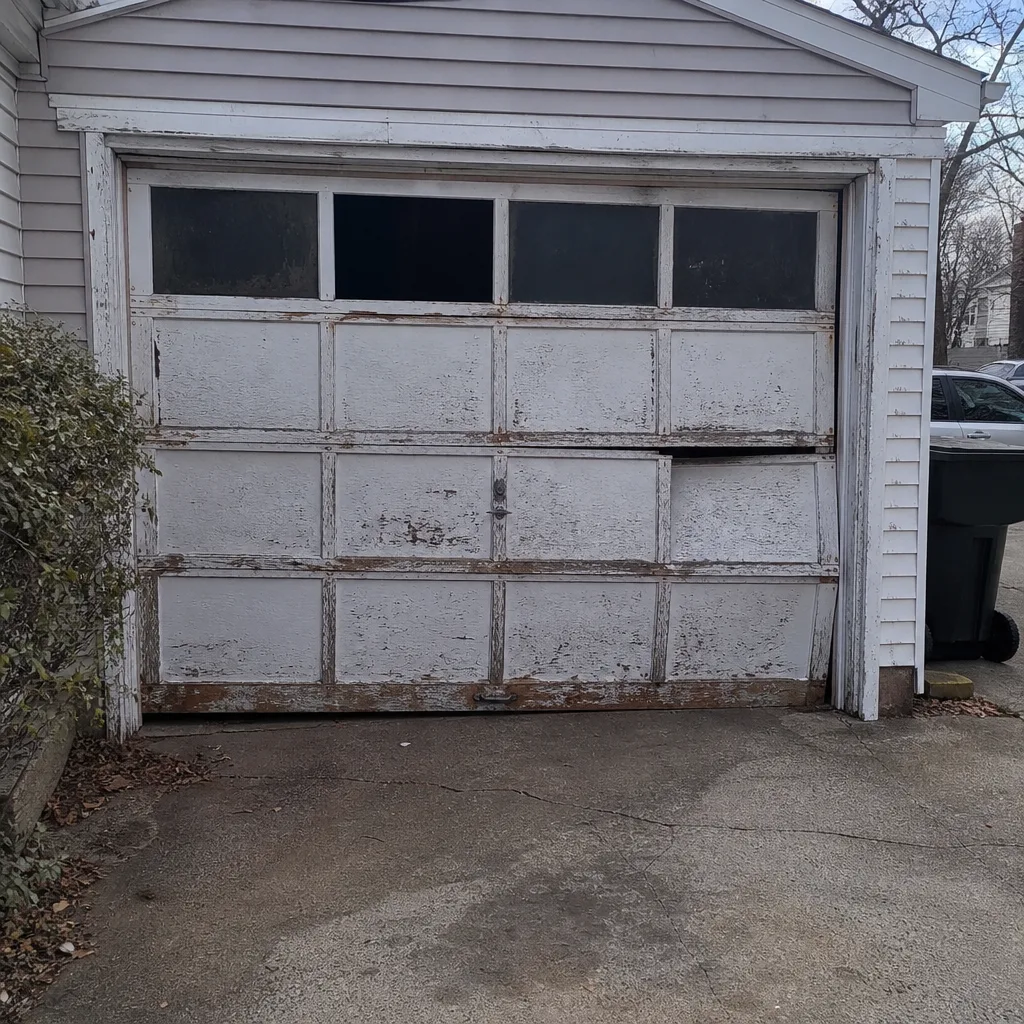 Before
 After
 Before
 After
 Before
 After