Last updated November 23, 2026
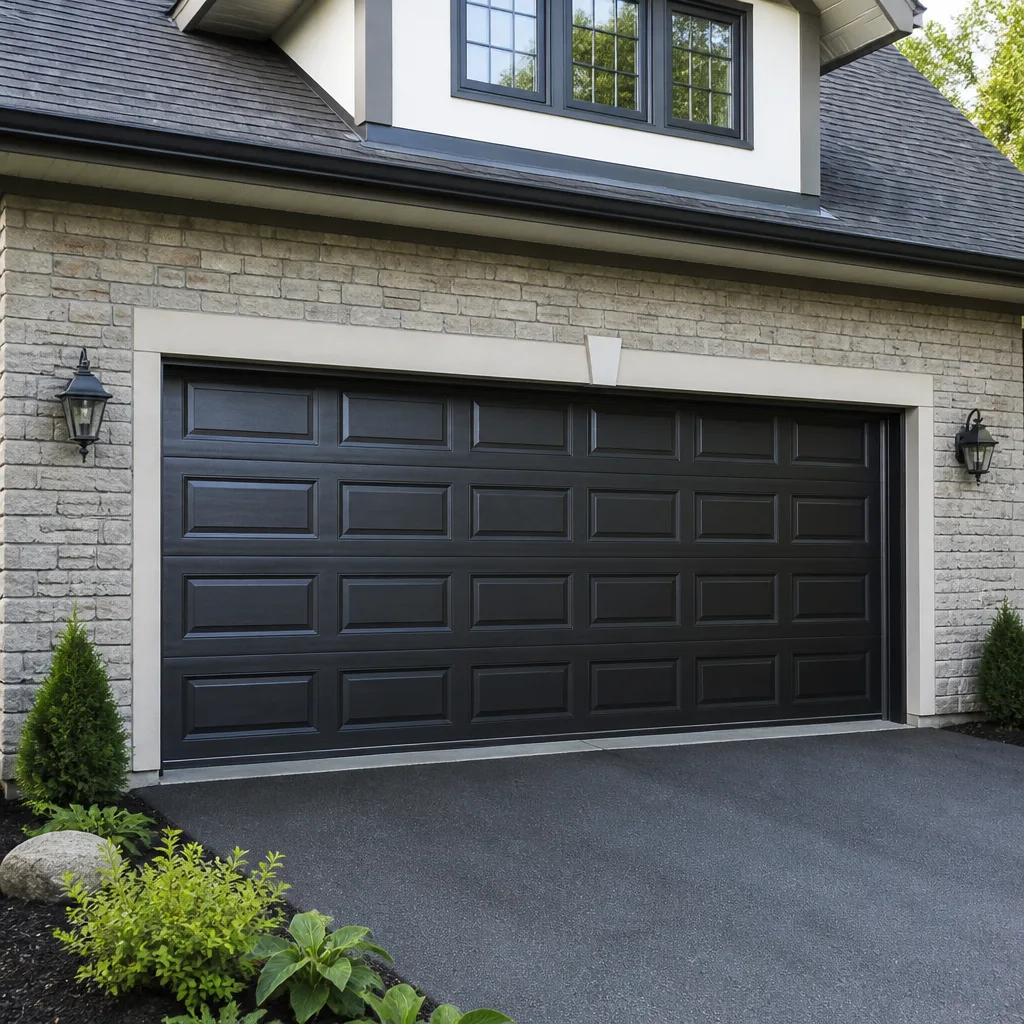 Raised-panel steel
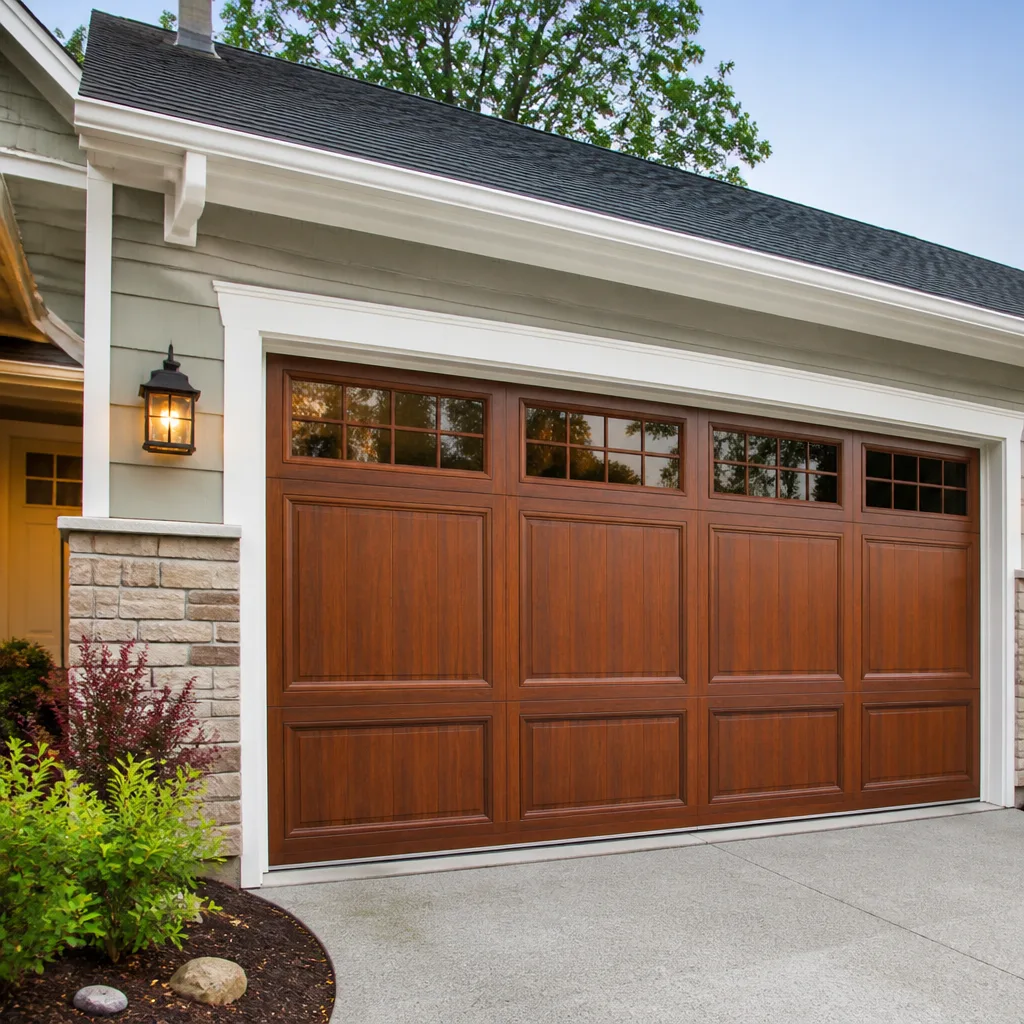
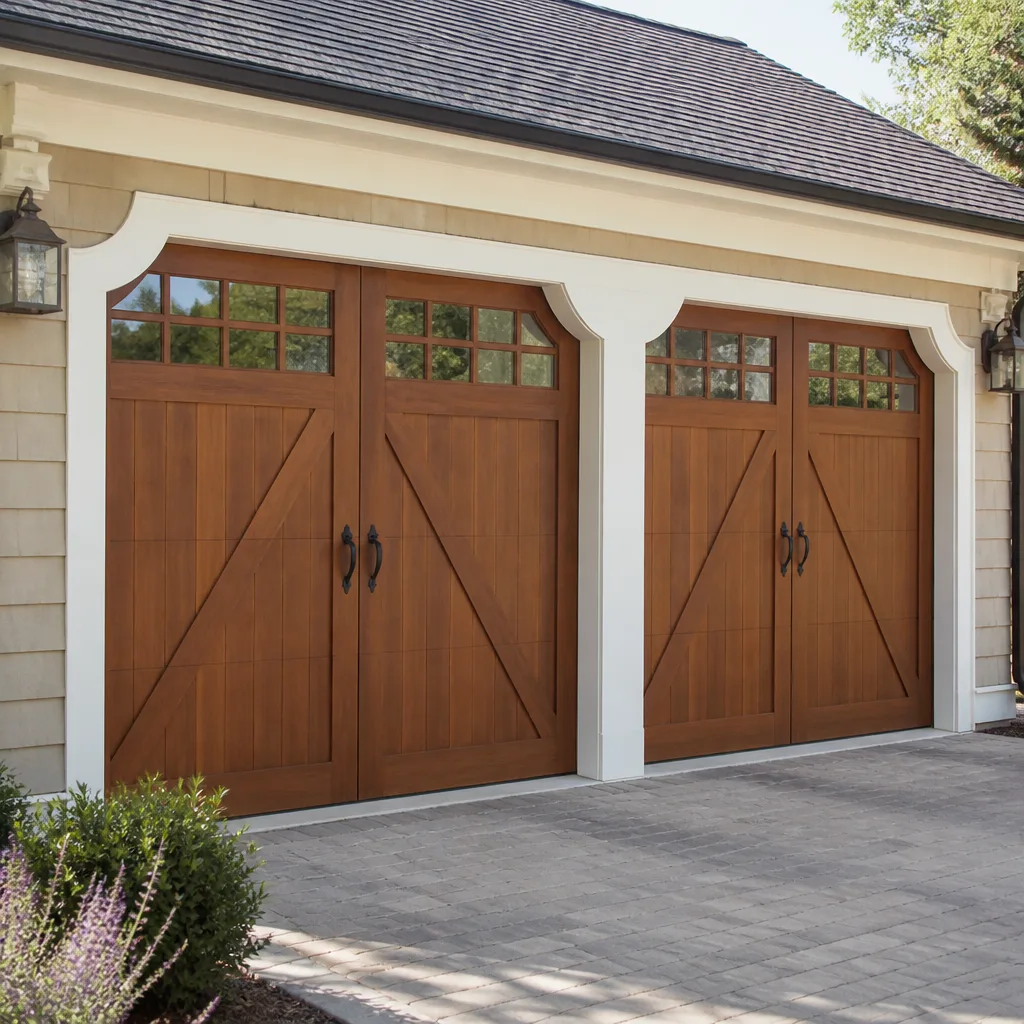 Carriage house
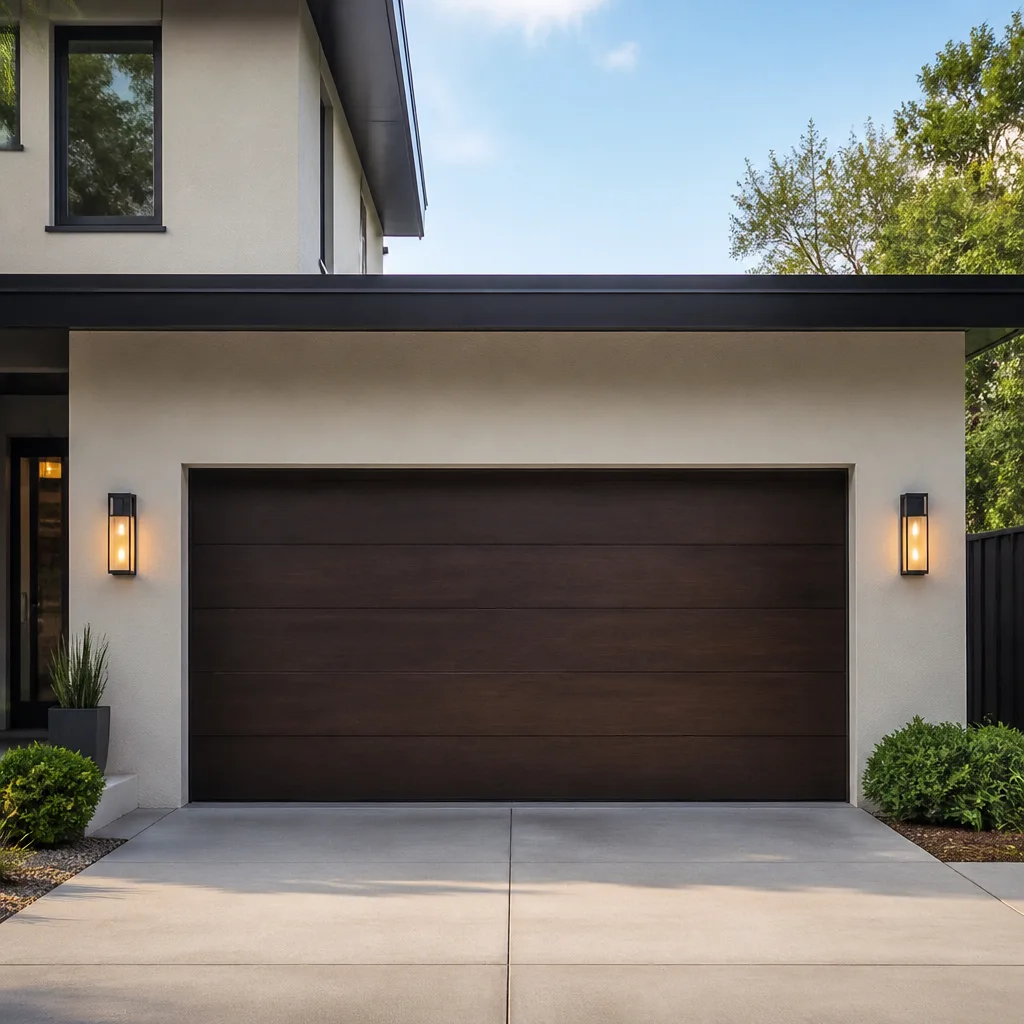 Modern flush
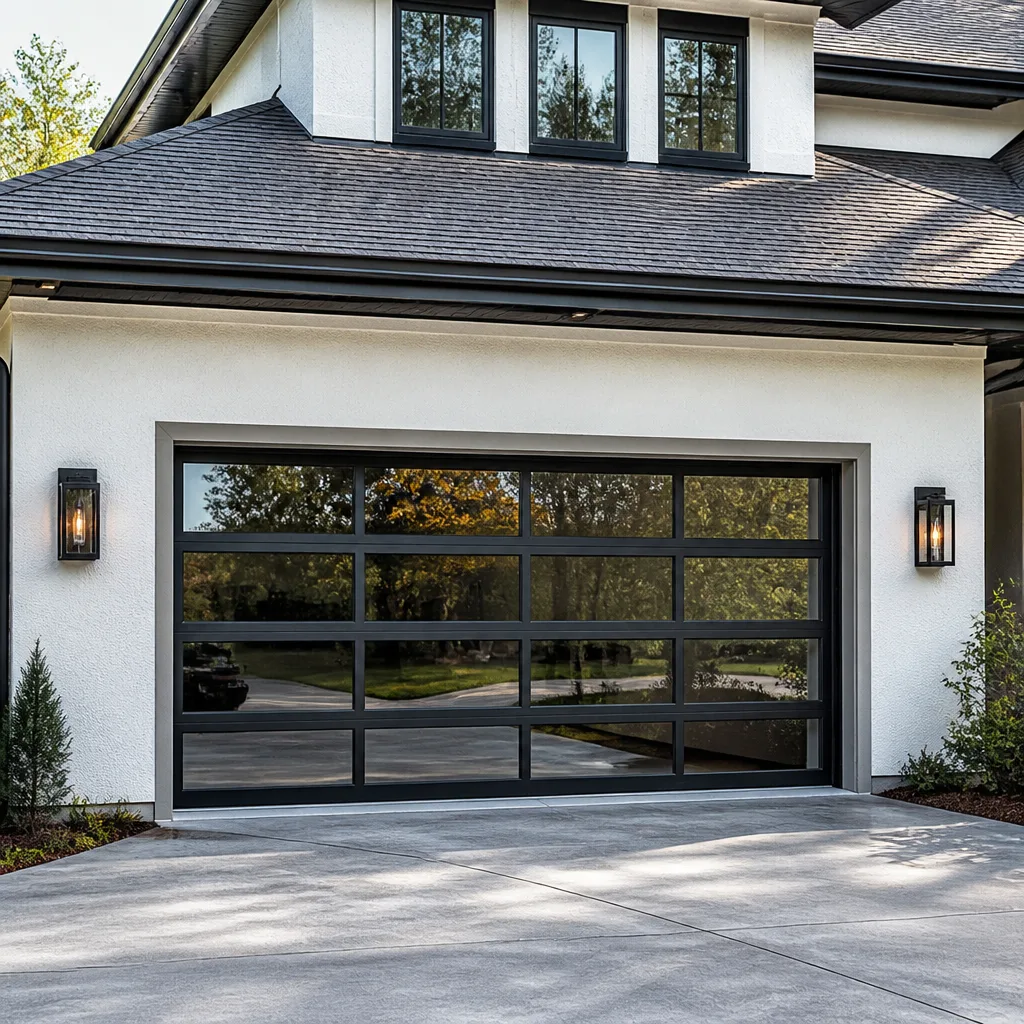 Full-view glass
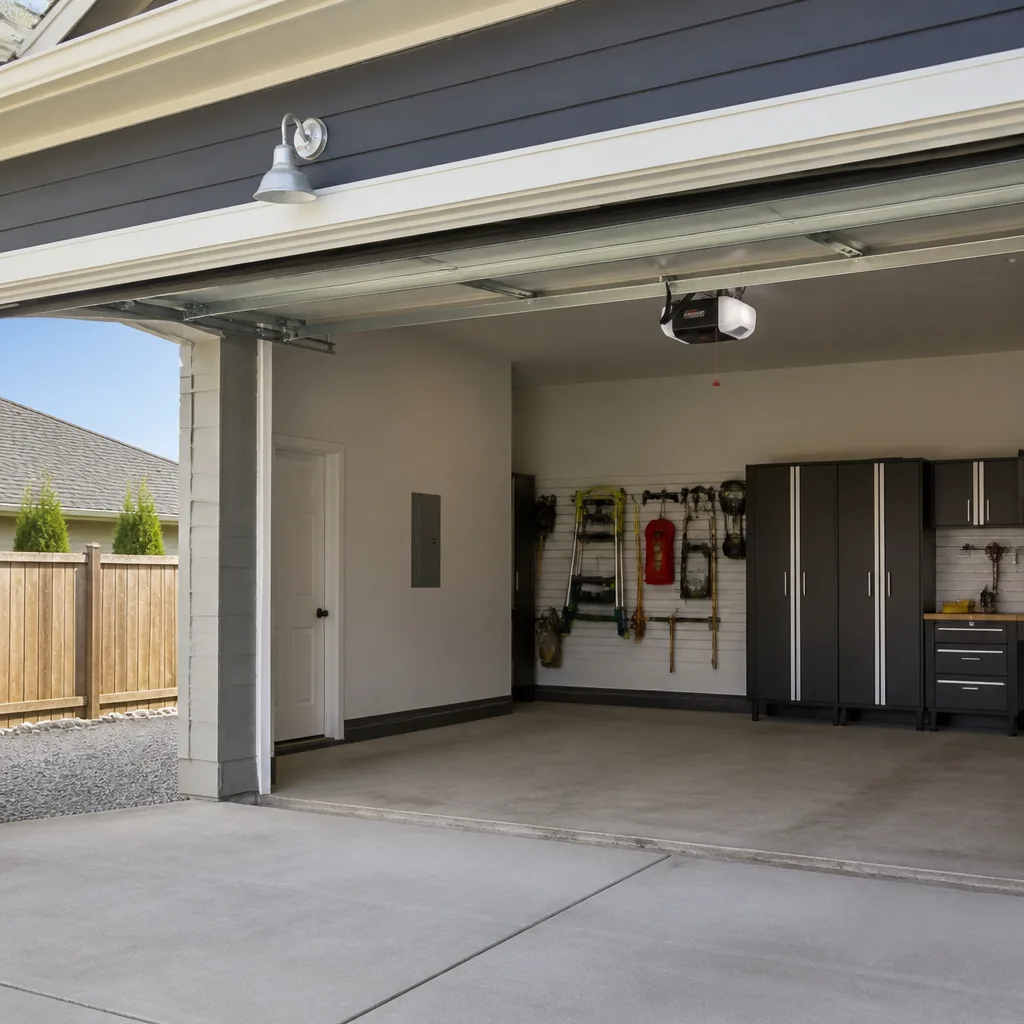 LiftMaster openers
 Chamberlain openers
Full 25-point door and opener safety check with every visit - springs, cables, rollers, tracks, and your LiftMaster or Chamberlain opener included
You get a price before we start. It does not change when the pro arrives.
Get your free estimateThe Complete Guide to Garage Doors in Norwalk
Most garage door guides are written for a generic suburban ranch in the midwest. If you live in Norwalk with a 1960s colonial, a detached garage, and a tight driveway cut into a slope, that advice can cost you real money. A door spec that works in a flat, dry subdivision can fail here in a few seasons. Our winters swing hard between freezing and thawing, the summers run humid, and plenty of garages in this city were framed long before anyone thought about standard door heights.
This guide maps every decision – material gauge, opener type, insulation, brand, even the bottom seal – to what actually holds up in and around Norwalk. You’ll learn how to read your own opening, what to check before you buy anything, and when a job belongs in a technician’s hands.
Quick Answer
The right garage door for a Norwalk home is usually a steel door with heavier gauge panels, galvanized hardware, and a properly sized opener matched to your door’s weight and your garage’s clearance. What matters more than brand is fit: opening height, header clearance, driveway slope, and how much insulation your attached garage needs. Measure first, choose second, and have anything involving springs, cables, or opener wiring handled by a trained technician.
Styles & brands we work with
- Raised-panel steel
- Carriage house
- Modern flush
- Full-view glass
- LiftMaster openers
- Chamberlain openers
Table of Contents
- Why Your Opening Comes Before Any Door Decision
- How Norwalk’s Humidity and Winters Shape Material Choice
- Low-Clearance and Non-Standard Openings in Older Homes
- Brand Availability in Fairfield County: What’s Stocked vs. Special-Order
- Insulation for Attached Garages in a Cold-Winter Climate
- Driveway Grade, Apron Slope, and Bottom Seal Selection
- Choosing an Opener: Lift, Weight, and Smart Features
- A Seasonal Maintenance Routine That Fits This Region
Why Your Opening Comes Before Any Door Decision
Before you compare panels or openers, measure the opening itself. In Norwalk, a surprising share of older garages were built to dimensions that don’t line up with today’s off-the-shelf door sizes. A door ordered on assumed measurements can arrive too wide, too short, or sitting an inch off the header, and no amount of adjustment fixes a poor fit.
Here’s the order we walk homeowners through:
- Width and height, three places each. Measure the opening at the top, middle, and bottom. If the numbers differ, the smallest one governs sizing.
- Headroom above the opening. This is the space from the top of the opening to the ceiling. A standard sectional door needs clearance above the header for the track curve; too little and you need a low-clearance setup or a different door type.
- Backroom. The distance from the opening into the garage tells you whether the door can sit horizontal when open. Short garages can rule out standard track layouts.
- Sideroom. Space beside the opening, left and right, for the vertical track and spring hardware.
- Header condition. Old framing that has shifted or sagged changes everything downstream. Check how the header looks before ordering.
If the numbers line up cleanly, a standard door order is simple. If they don’t, you’ll want a professional measure before anything is purchased. We handle this routinely on garage door repair and installation calls around Norwalk, and it’s the step that saves the most rework.
How Norwalk’s Humidity and Winters Shape Material Choice
Material choice here is not really about looks. It’s about how a door survives a climate that runs humid in summer and cycles through freezes in winter. Steel is still the practical default for most Norwalk homes, but the gauge and the hardware matter as much as the skin.
A thin-gauge steel door can dent under impact and, in humid months, show surface corrosion on fasteners and hardware faster than heavier stock. Look for these specifics when you shop:
- Heavier gauge steel panels. Thicker steel resists dents better and holds its shape through seasonal expansion and contraction.
- Galvanized or coated hardware. Hinges, tracks, brackets, and fasteners should be plated or galvanized rather than bare steel. It’s the small parts that show wear first.
- Sealed or insulated cores. A door with a filled core (polyurethane or polystyrene) resists moisture movement through the panel better than a hollow shell.
- Finish preparation. Factory-applied finishes on steel doors hold up better in humid stretches than site-applied paint.
Swing and carriage-style doors show more seasonal movement in Norwalk than steel, since wood absorbs and releases moisture. If you love the look, plan on regular inspection of the paint and joints. For most attached garages, steel is the more predictable long-term choice – and the one our technicians see holding up best.
Low-Clearance and Non-Standard Openings in Older Homes
A lot of Norwalk garages weren’t built with modern door clearances in mind. When we measure an older opening, headroom and backroom often come in tighter than what a standard sectional door needs. Two common fixes exist – a low-clearance track conversion or a different door type – and the right answer depends on how short the space actually is.
What typically rules out a standard option here:
- Headroom under about a foot. Standard track needs more curve clearance than that. A low-clearance track redirects the door sooner.
- Short backroom. If the garage is shallow, the door may need high-lift or vertical-lift track rather than standard horizontal track.
- Low header heights. Older framing sometimes puts the header lower than modern door sizing. You either go with a shorter door or modify the opening.
- Offset or sagging headers. These make a standard install unreliable; the opening may need structural attention first.
If a short garage leaves you with a low-clearance track, the opener choice changes too. Compact openers or a jackshaft setup often fit better than a standard ceiling-mounted unit. It’s the kind of thing that’s worth confirming before you buy a door, not after. This is why we measure first – and why installation here is never a straight swap.
Brand Availability in Fairfield County: What’s Stocked vs. Special-Order
Brand availability in Fairfield County is uneven. Some openers are commonly stocked by local suppliers; some door lines are special-order with lead times that stretch out during busy seasons. Knowing which is which helps you plan a project without surprises.
What our technicians work with routinely matters, because it’s what’s actually in area driveways:
- LiftMaster and Chamberlain openers are extremely common in Norwalk homes, and parts for both are generally easy to source locally.
- Craftsman openers turn up widely on older equipment, often on homes that changed hands. They’re serviceable and parts are typically available.
- Wayne Dalton doors show up across the region, especially on homes built or updated in the last couple of decades.
- Raynor doors appear less frequently but are well supported; parts still arrive through normal channels.
For door panels and full replacements, standard steel lines are often available from suppliers relatively quickly. Custom sizing, specialty finishes, and non-standard colors can require a longer lead – usually measured in weeks, not days. That’s not a reason to settle for a size that doesn’t fit; it’s a reason to measure accurately up front.
When we work on older or inherited equipment, we don’t push replacements that aren’t needed. If a garage door opener repair can restore a Craftsman or LiftMaster unit that still has life in it, that’s often the right call.
Insulation for Attached Garages in a Cold-Winter Climate
Insulation matters most when your garage shares a wall or ceiling with the house. In this region’s winters, an uninsulated attached garage can be the coldest room by a wide margin, and it costs your home’s energy performance. The choice comes down to whether you want the garage to stay viable for daily use or just to buffer the house.
What to look for:
- A filled core, not just a layer. Insulated steel doors use a foam core (polyurethane or polystyrene) bonded inside the panel. A “sandwich” of steel over an open frame insulates far less than a solid core.
- Panel thickness. Thicker insulated panels hold temperature better than thinner ones. Two-inch panels are common on cold-climate garages.
- Thermal breaks between panels. Metal-on-metal contact at the joints lets cold through. Look for doors that separate the inner and outer skins at the edges.
- A properly sealed perimeter. Insulation works only as well as the seal around it. Weatherstripping at the top and sides, and a bottom seal that actually meets the floor, complete the package.
For an attached garage used as daily access, an insulated core is worth it. For a detached work garage where the temperature is what it is, an uninsulated steel door may be enough. Either way, matching the door to the garage’s real role beats guessing.
Driveway Grade, Apron Slope, and Bottom Seal Selection
Norwalk’s hills mean a lot of driveways meet the garage at an angle rather than flat. A door bottom seal sized for a level apron won’t meet the floor on a sloped one, and that leaves a gap that lets water, cold air, and small pests into the garage.
The fix depends on the shape of the slope:
- Measure the apron’s rise. Check how much higher the driveway is on one side of the opening than the other. A small rise is fine with a standard seal; a bigger one needs a shaped profile.
- Match the seal profile to the gap. A bulb seal suits small unevenness. A shaped or offset seal, or a garage threshold, handles steeper aprons better.
- Check the door’s travel. The door should lower to the same point every time; irregular stops cause the seal to gap on one side.
- Look at where the apron meets the floor. If the concrete slab is sunken or cracked at the door line, a threshold strip may be needed before any seal works.
Getting the bottom seal right is one of the most overlooked parts of a garage door install – and one of the cheapest to fix. If you’re noticing standing water, drafts, or leaves inside the door line after a storm, this is the first thing to check.
Choosing an Opener: Lift, Weight, and Smart Features
An opener is only as good as the door it lifts. Before choosing a motor, understand the door’s weight and the spring system supporting it. A properly balanced door should lift by hand with moderate effort; if it doesn’t, no opener will fix the problem.
What to weigh when you pick:
- Belt vs. chain drive. Belt drives run quieter, worth considering where the garage sits under or beside a bedroom.
- Horsepower match. Heavier insulated doors need more lift. A too-small opener strains and shortens the door’s life.
- Wi-Fi and app control. Convenient on newer installs, and common now on LiftMaster and Chamberlain models.
- Battery backup. Useful in outage-prone weather, when you don’t want to be locked out or in.
- Jackshaft or wall-mount options. These suit garages with tight headroom where a ceiling unit won’t fit.
On a properly balanced door, a matched opener lasts. On a poorly balanced one, even a quality unit will fail early. That’s why we check the door’s balance before recommending any opener – spring and opener work go together, and a proactive check of the weight and spring tension prevents most surprise failures. You can read more about garage door spring repair if the door is struggling to lift.
A Seasonal Maintenance Routine That Fits This Region
Garage doors here take more of a beating than their inland counterparts, mostly because of the freeze-thaw cycle and summer humidity. A short maintenance routine twice a year prevents the majority of avoidable failures. Do this in spring and fall:
- Lubricate the moving metal parts. Hinges, rollers, and the spring area benefit from a proper garage door lubricant, not WD-40.
- Test the balance. Disconnect the opener and lift the door halfway. If it doesn’t hold, the springs need a look.
- Check the bottom seal. Look for gaps, cracking, or the seal pulling away from the door.
- Inspect the opener’s safety reverse. Put an object in the door’s path and confirm the door reverses on contact.
- Look at the tracks. They should be straight and clean; don’t grease them, since grime collects on grease.
- Clear the sump. Leaves and debris at the door line let water in and stress the seal.
If something in this list doesn’t feel right – a door that hesitates, a spring that looks stretched, a seal that keeps failing – that’s when to call. Our technicians have up to 10 years of experience and can handle every part of the door in one visit.
Common Mistakes to Avoid
- Ordering a door on an assumed measurement. Older Norwalk openings rarely match today’s standard sizes. Measure before you buy, or you risk a door that doesn’t fit the framing you have.
- Choosing an opener before checking the door’s balance. A door that lifts hard will wear out any new motor. Fix the balance first, then pick the opener.
- Skipping the bottom seal on a sloped apron. A standard seal on an angled driveway leaves a gap that drafts and water find every time.
- Buying thin steel to save a little. In a humid, freeze-thaw climate, thin panels and bare hardware show wear fast. Heavier gauge and galvanized parts cost less over the years.
- Replacing a whole door because a spring or opener failed. Most failures are repairable, and a well-chosen repair is often the right call. Get an honest assessment before you replace.
- Touching the springs yourself. Garage door springs are under extreme tension and can cause serious injury. That’s a job for a trained technician with the right tools.
- Ignoring the track and hinges. They’re the cheapest parts to maintain and some of the first to fail in a humid climate.
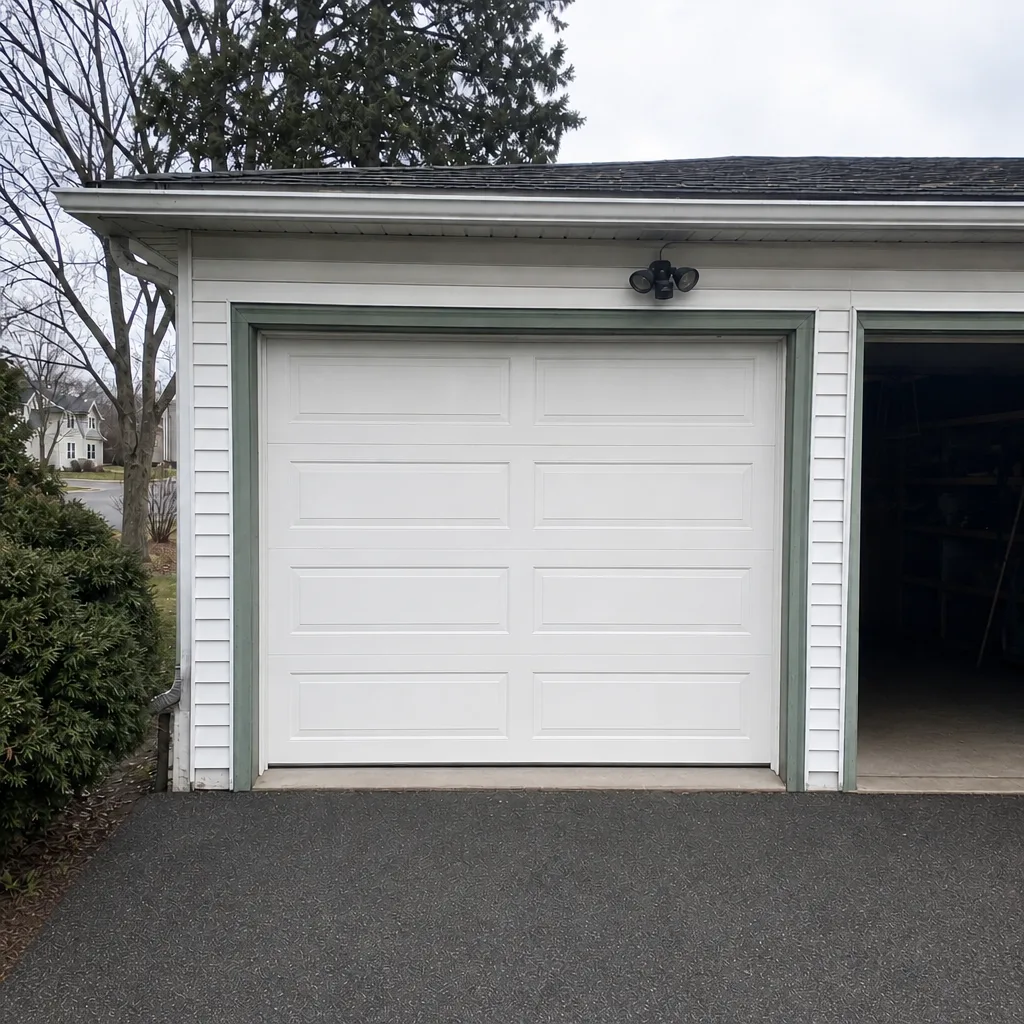
See the difference
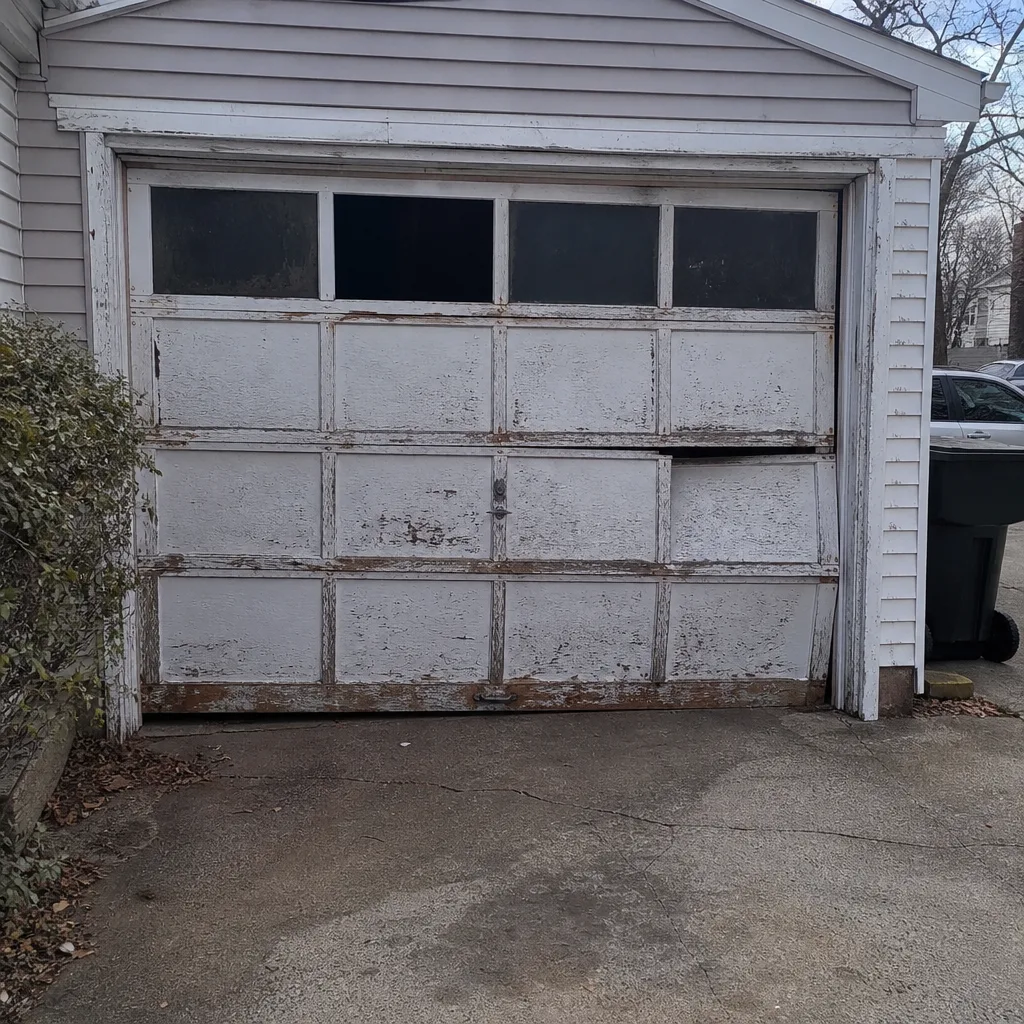 Before
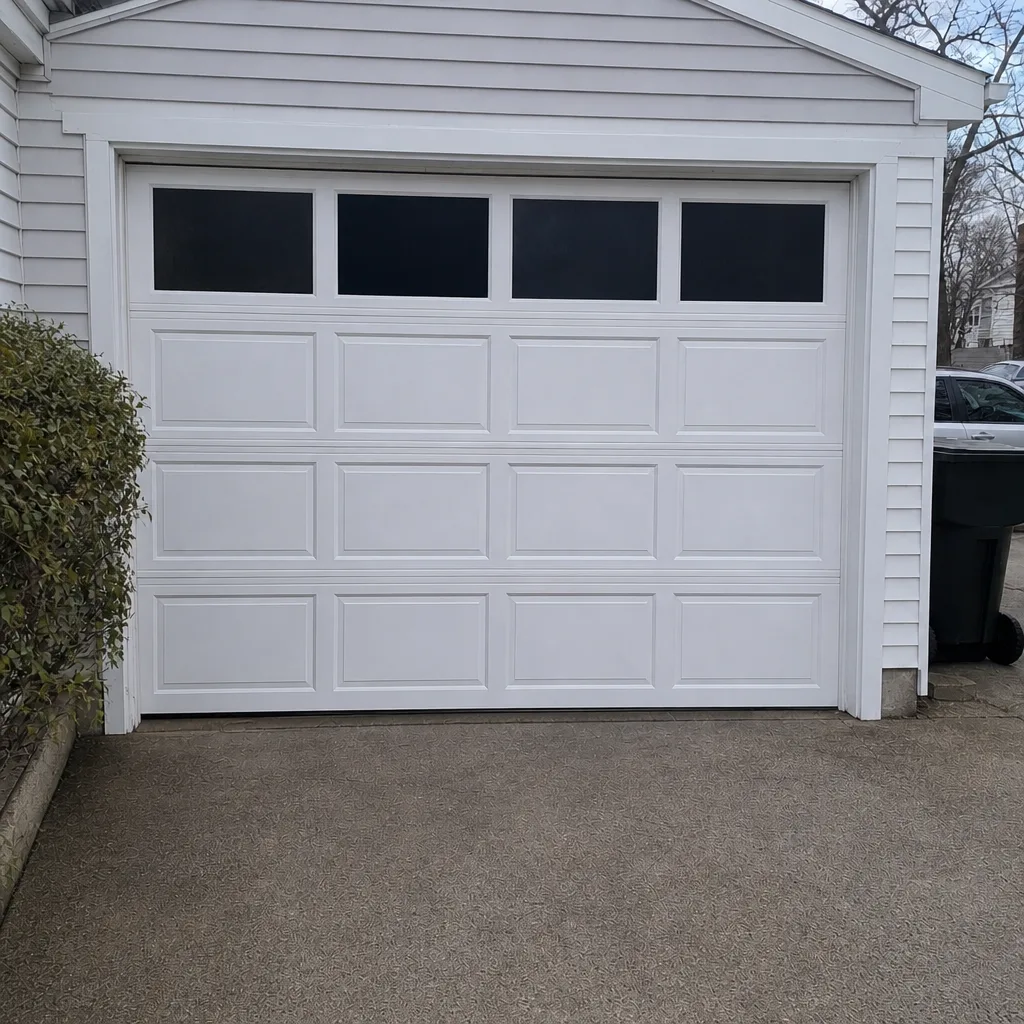 After
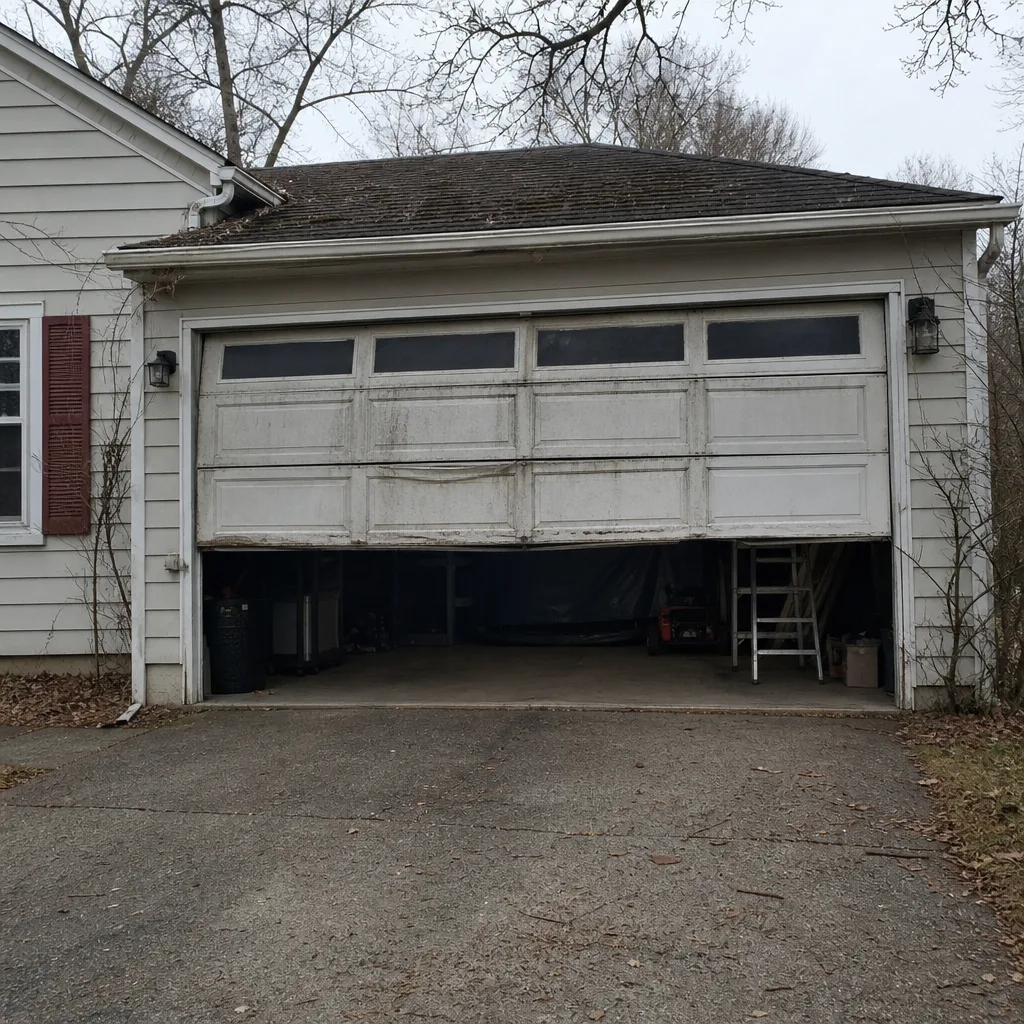 Before
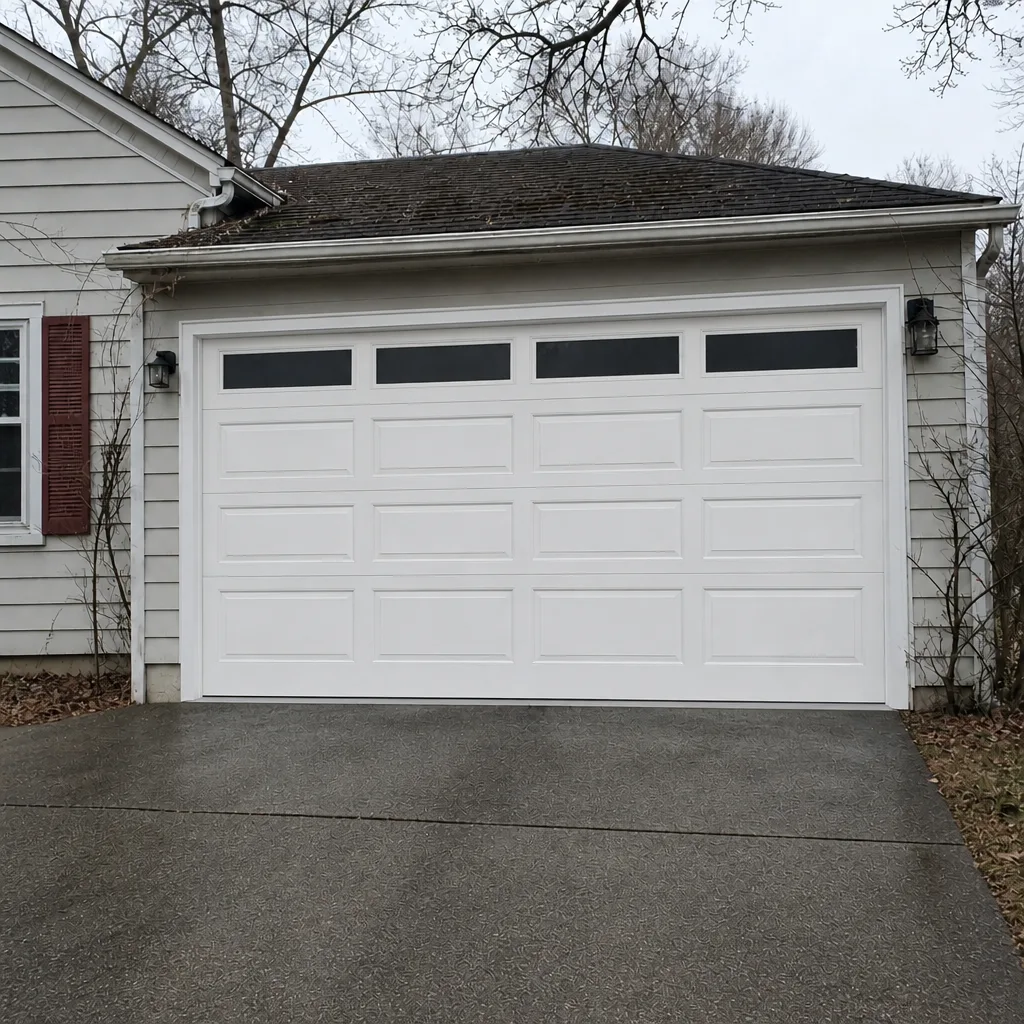 After
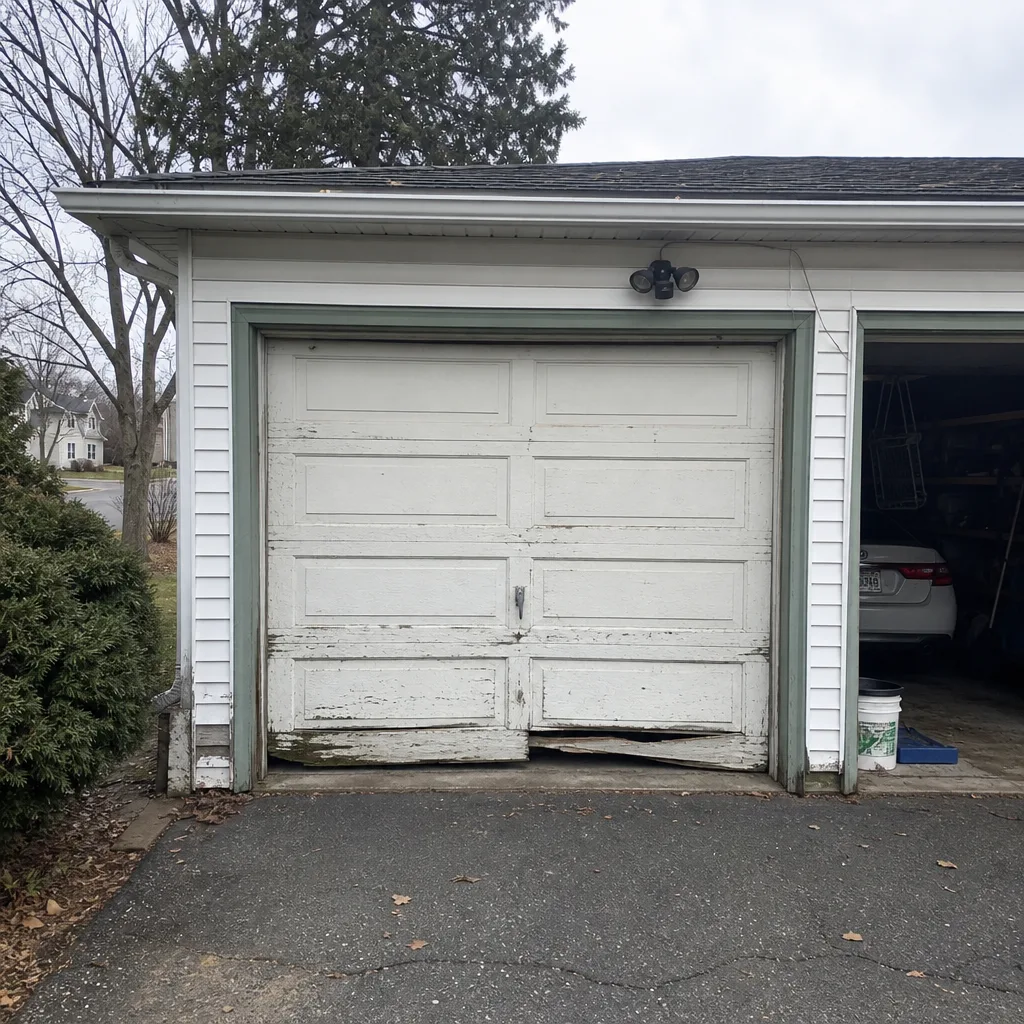 Before
 After
When to Call a Professional
Some jobs are straightforward. Others simply shouldn’t be handled without a trained technician. Call for these situations:
- The door won’t open, won’t close, or reverses partway.
- A spring appears broken, stretched, or the door feels unusually heavy.
- Cables are loose, frayed, or off their drums.
- The opener runs but the door doesn’t move, or makes grinding noises.
- The door isn’t balanced, or the track is bent.
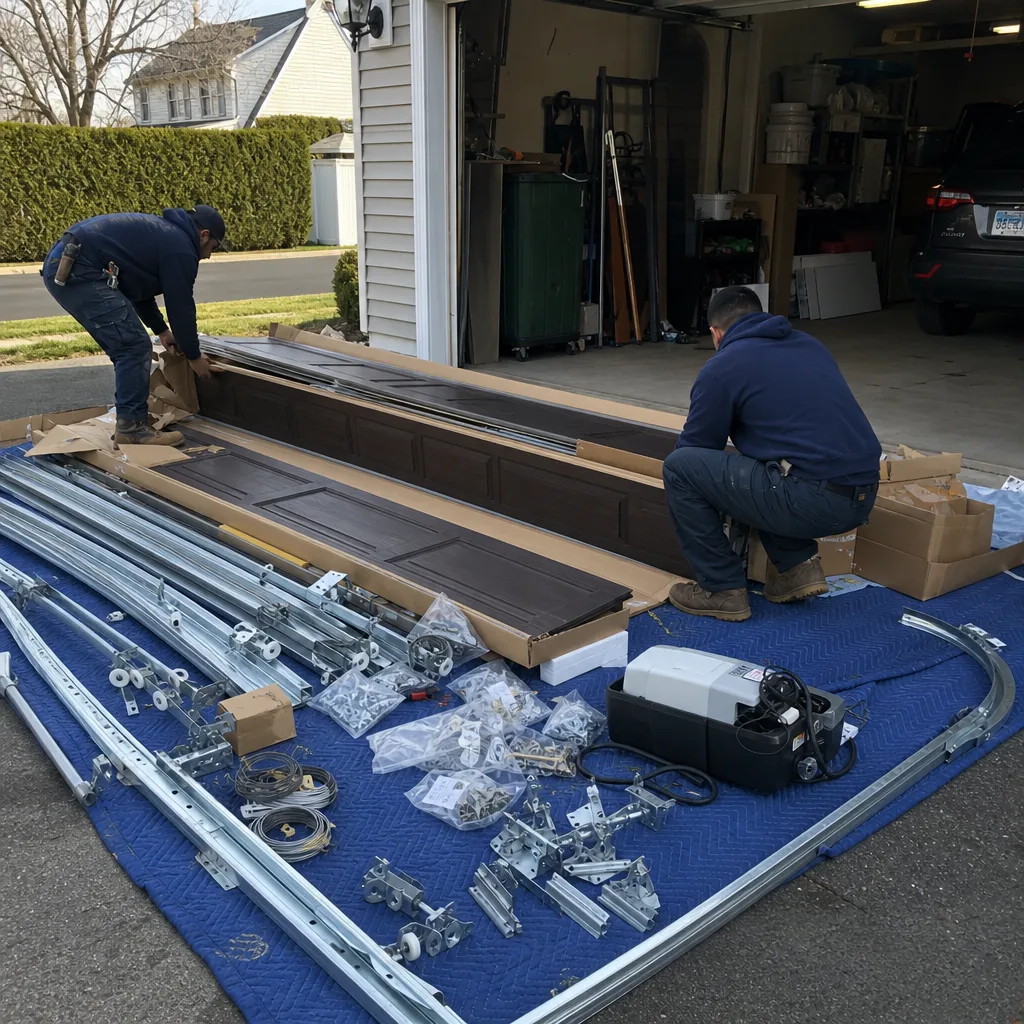
- You’re installing a new door or opener and want the measurement and fit confirmed.
Any work near springs and cables belongs with a professional. Norwalk Garage Door Repair Co offers free estimates in Norwalk and can give you a written price before any job starts. Call (866) 964-5735 to book a visit.
Frequently Asked Questions
There’s no single price – it depends on size, material, insulation, and whether the opening is standard. The best approach is a free measurement and a written estimate, which spells out the door, hardware, and installation in one number. Call (866) 964-5735 for an exact quote – estimates are free.
Yes, in most cases. Low-clearance track, high-lift track, or a different door type can solve tight headroom and shallow backroom, but the right choice depends on the actual measurements. Have the opening measured and the fit confirmed before you order anything.
We connect you with vetted local professionals, and the local pro is licensed and insured as the state requires. Our technicians have up to 10 years of experience, and we handle the whole job from measurement to finished door.
No. The written estimate is the price. We quote before any work starts, and there are no surprise additions after the fact. Call (866) 964-5735 for an exact quote – estimates are free.
We service all the major brands you’d find in a Norwalk driveway, including LiftMaster, Chamberlain, Craftsman, Wayne Dalton, and Raynor. We work on the brand you already have, and if it’s inherited equipment or a mixed-brand setup, we can still help without pushing a replacement you don’t need.
Check the opening width and height, headroom, backroom, sideroom, and the header’s condition. Also check the driveway’s slope at the door line. If any of these is off, the door needs to be sized and specified around them, not ordered to standard assumptions. A free measure is the safest starting point.
The Bottom Line
Garage door decisions in Norwalk come down to fit and climate, not brand names or looks. Measure first, account for the humidity and freeze-thaw cycle, respect low-clearance openings in older homes, and match the bottom seal to the driveway’s slope. Get the insulation right for attached garages, and check the door’s balance before choosing an opener. Do those things and your door will perform for years. Skip them and you’ll be repairing sooner than you should. Start with the straightforward advice above, and call (866) 964-5735 for a free estimate when you’re ready.
Our comprehensive coverage includes garage door repair, garage door opener repair, garage door spring repair, and new garage door repair installations.
Norwalk Garage Door Repair Co connects homeowners across Norwalk with vetted local professionals for repair, opener, spring, installation, and emergency work. Call (866) 964-5735 for a free estimate and a written price before any work begins.
Written by the team at Norwalk Garage Door Repair Co.